
Implant-Supported Dentures in Columbia, PA, serving Lancaster and York Counties
An implant-supported denture connects to implants in the jaw instead of relying only on the gums. It may improve stability, but the design, surgical steps, and maintenance depend on your mouth and health.
How Implants Improve Denture Support and Retention
An implant-supported denture connects replacement teeth to implants in the jaw to improve support or retention. Some designs are removable for cleaning, while others are fixed and require a different maintenance routine. The plan depends on anatomy, oral health, and the type of appliance that suits your needs.
Implant retention can reduce the movement of a denture, but the way the appliance connects to the implants determines its daily care. A removable overdenture is taken out for cleaning; a fixed design is cleaned in place and removed by a clinician when necessary. Some removable designs also rest partly on the gums. Ask which support and connection are proposed for your mouth.
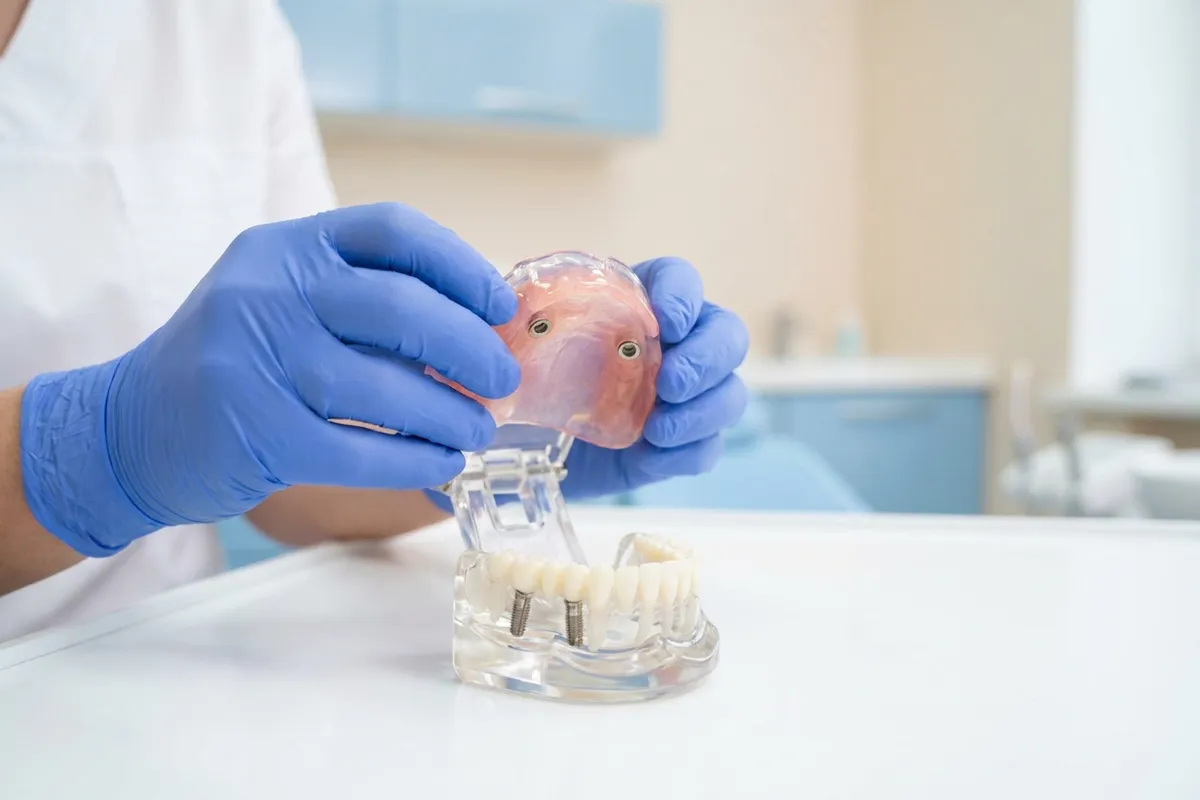
Why Implant Support May Help
A conventional denture may move during eating or speaking when support is limited. Implants can provide additional retention or support in suitable cases. They do not remove the need for surgery, adaptation, or future adjustments. The benefits should be discussed alongside conventional dentures and other replacement options.
A conventional denture that lifts during speech or chewing may lead to a discussion about implant retention after its fit has been assessed. Implants can improve stability for selected patients, but they do not remove every adaptation or maintenance need. The plan should identify the problem with the current appliance and explain how the proposed attachment system is expected to address it.
- Implants can add retention or support when a conventional denture moves during eating or speech, depending on the selected design.
- A removable implant-retained denture and a fixed implant-supported restoration have different cleaning, handling, and maintenance requirements.
- Improved stability does not remove the need for adaptation, surgical healing, or eventual replacement of worn attachment components.
Who May Be a Candidate
Assessment considers the bone available, gum health, medical conditions, medicines, and your ability to maintain the appliance. Smoking and some health factors can affect healing. A current denture may or may not be adaptable, and not every patient needs or is suitable for the same number of implants.
Assessment includes available bone, the shape of the gums, the opposing teeth, and space for the denture and attachments. You also need a practical way to clean around the implants and handle the appliance if it is removable. An existing denture is not always suitable for conversion. Its fit, strength, and design must be checked before promising it can be reused.
- Bone availability and health history affect implant planning; some sites need preparatory care or are better served by another replacement.
- Discuss whether you can remove and clean the planned appliance or reach beneath a fixed design, including any caregiver support needed.
- Bring your current denture for assessment, but do not assume it can automatically be converted to work with implants.
Timing and Treatment Stages
Care may involve extractions, grafting, implant placement, healing, and fitting the replacement teeth. Temporary arrangements depend on the case. The sequence and time needed vary, so an immediate final appliance is not assumed. We explain the expected stages and what eating and cleaning may involve between visits.
Planning Implant Positions and the Denture Connection
We examine the mouth and existing dentures, assess the bite, and review appropriate imaging. We discuss how the appliance will attach, whether it is removable, and how you will clean it. The findings guide the proposed number and placement of implants and whether additional or specialist care is needed.
- Imaging, examination, and bite records guide implant positions and the replacement design rather than a fixed number promised to every patient.
- Ask what temporary arrangement is planned during healing and whether extractions, grafting, or staged placement add appointments.
- Clarify how the appliance attaches, who can remove it, which parts can wear, and what maintenance visits will involve.
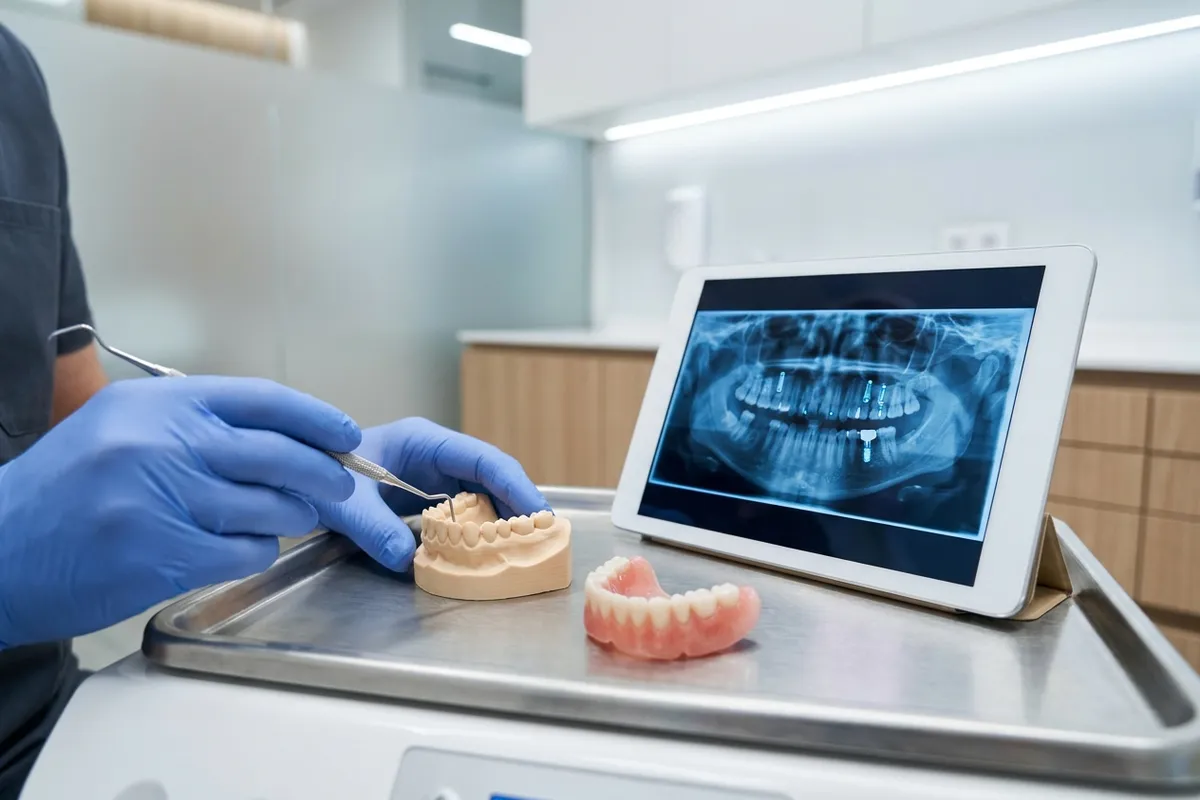
Design and Replacement Options
Options can include a removable denture retained by attachments or a fixed implant-supported restoration in selected cases. These designs differ in cleaning access, repair, and maintenance. We explain the planned appliance and alternatives so that your decision includes practical daily use as well as appearance and stability.
The number and positions of implants depend on the jaw and the proposed restoration rather than a standard formula for every patient. Placement and healing may precede attachment of the final denture, with interim care arranged separately. Compare removable and fixed designs by hygiene access, repair needs, and surgery. Ask which clips, inserts, or other components may need replacement over time.
Recovery and Long-Term Care
Follow surgical aftercare instructions and keep healing and fitting reviews. Once restored, clean the appliance and implant areas as directed and attend maintenance visits. Attachments and other components can wear or need replacement. Contact us about looseness, sore areas, swelling, or difficulty cleaning rather than adjusting parts yourself.
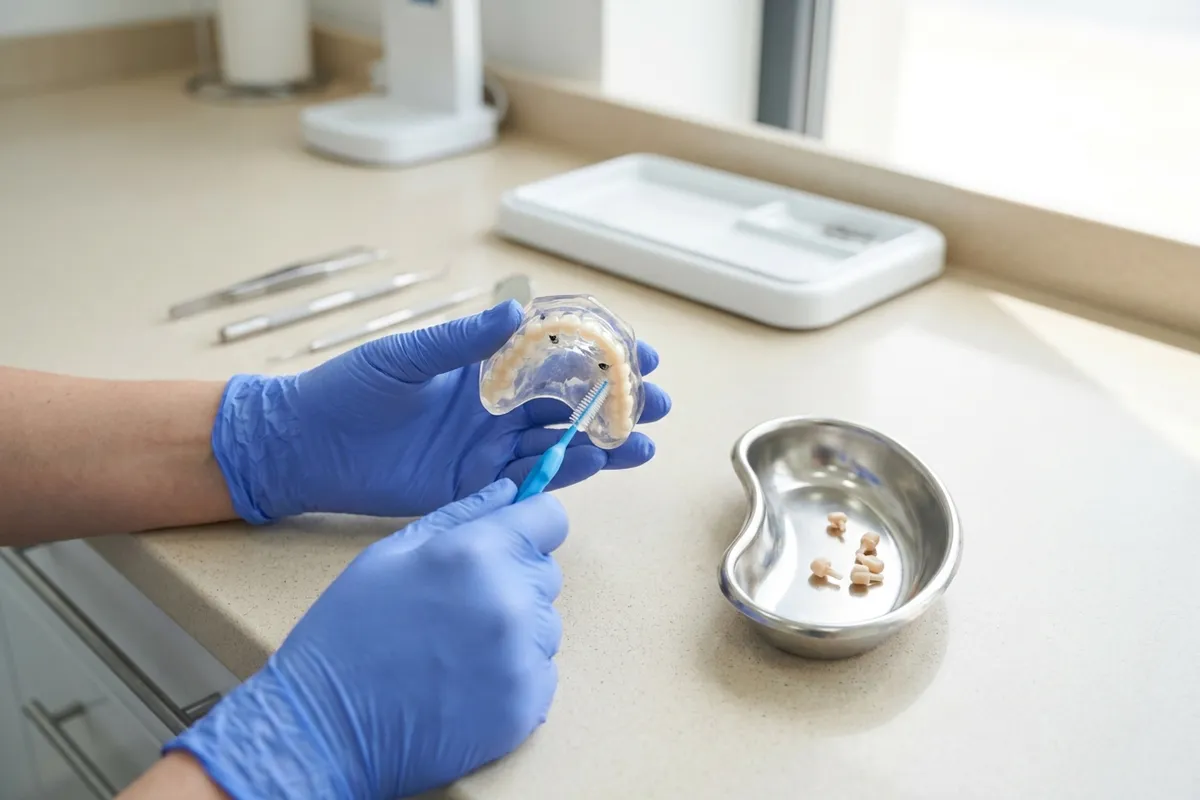
For a removable design, learn how to detach and reseat the denture without forcing the attachments. Clean the implant connections and the appliance separately as demonstrated. Fixed designs require tools that reach beneath the replacement teeth. Report rocking, a worn attachment, persistent soreness, or difficulty cleaning. Regular maintenance checks the implants, surrounding tissues, and the parts that retain the denture.
- Follow surgical aftercare first, then use the cleaning method demonstrated for the final appliance and the implant areas beneath it.
- Keep review appointments for attachment wear, bite changes, and tissue health; implants can still develop surrounding inflammation.
- Report movement, a broken component, or difficulty cleaning promptly, and avoid tightening or modifying implant parts yourself.
How it works
How they are made
Implants first, then a denture that stays put.
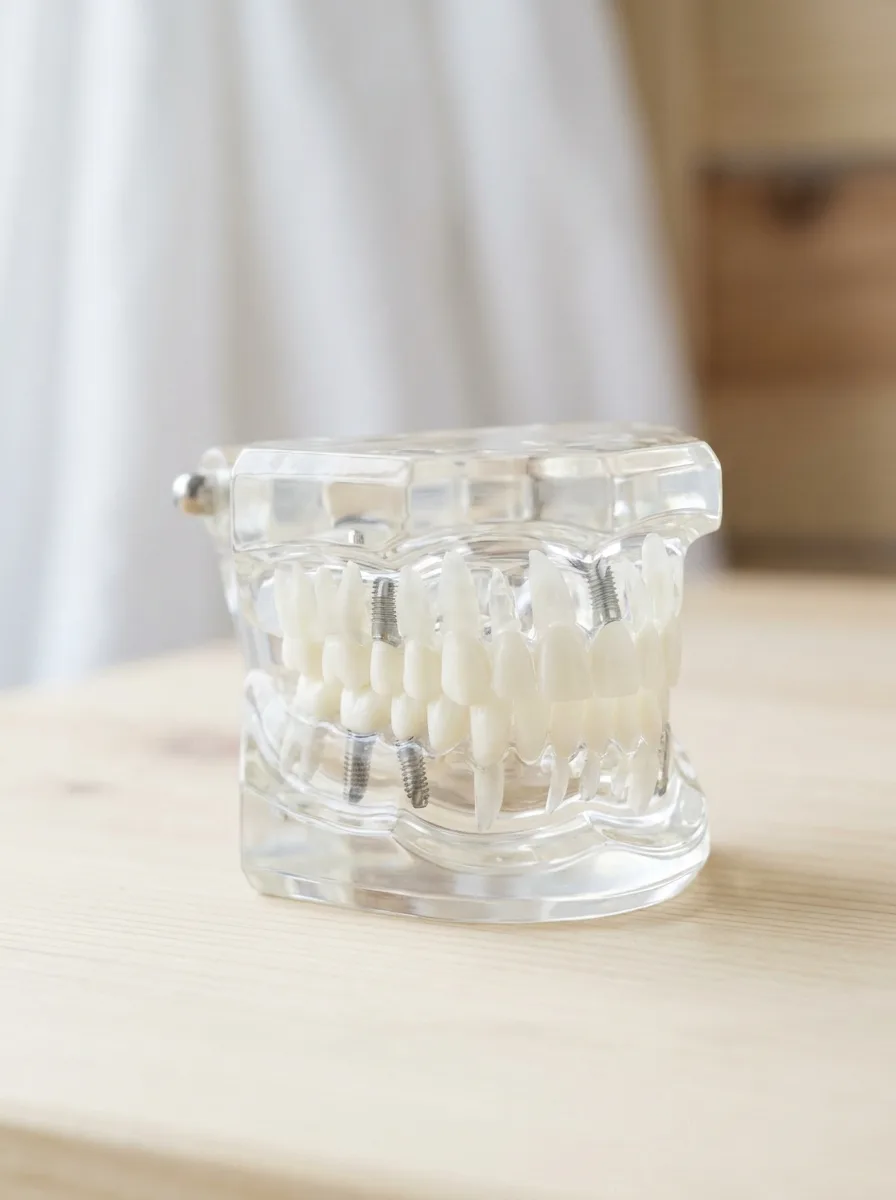 1
We plan
An exam and imaging show where the implants can go.
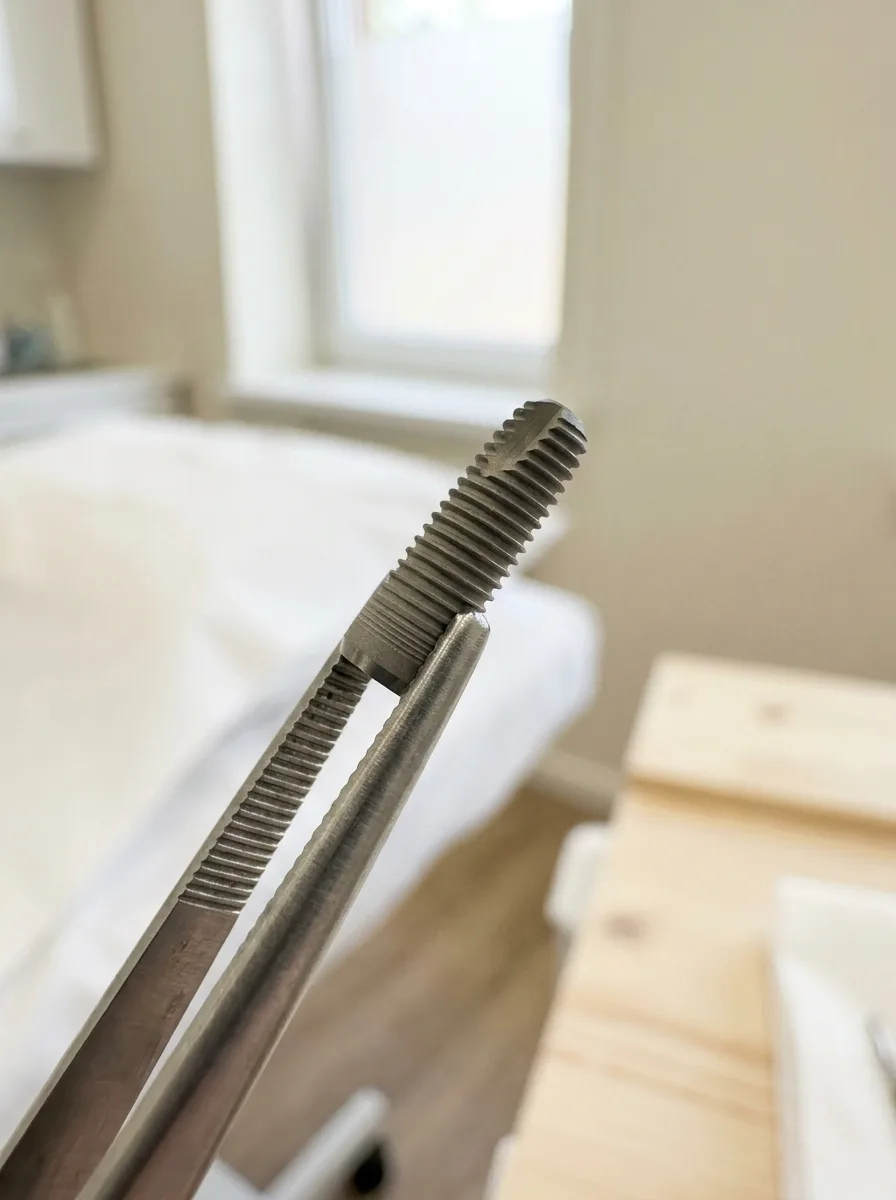 2
The implants are placed
The implants are placed in the jaw and left to heal and bond with the bone.
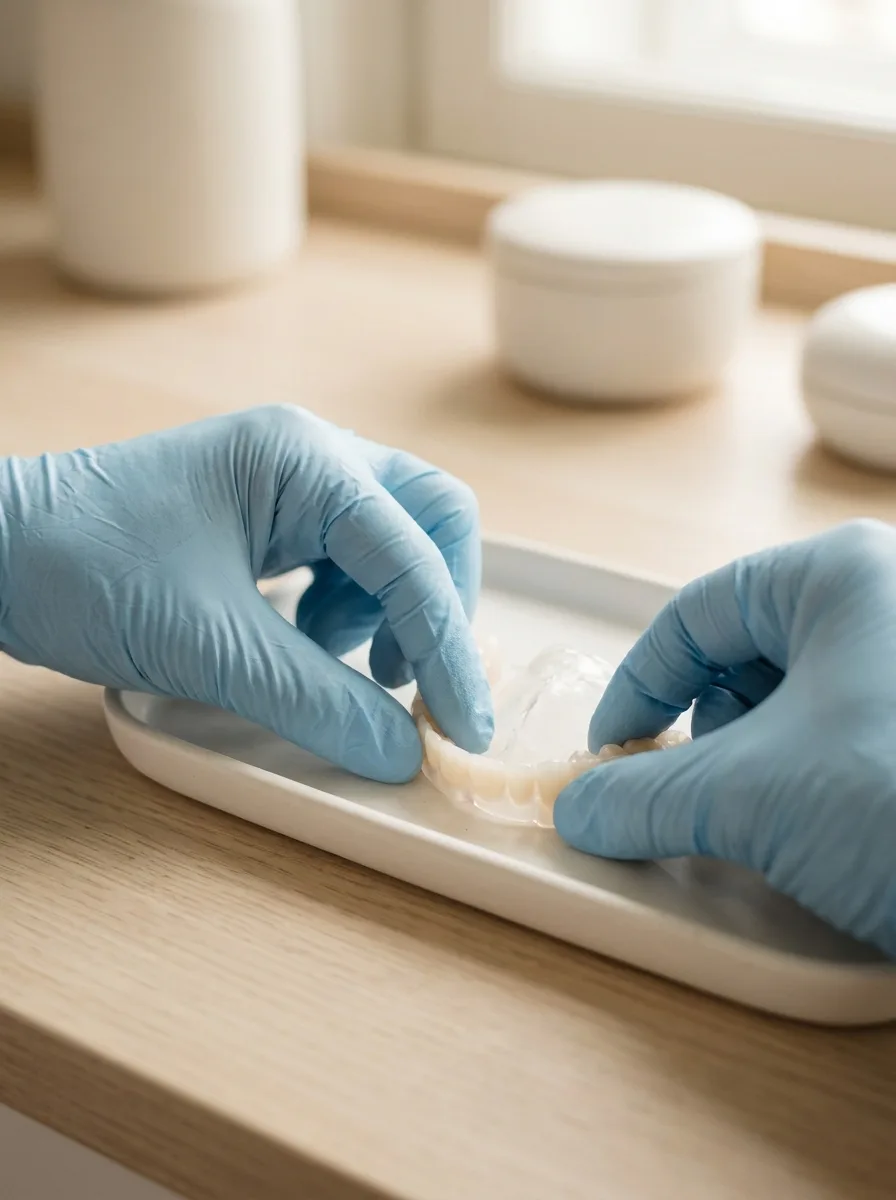 3
The denture is fitted
Your denture is made to attach to the implants and adjusted for comfort.
Services
Other services
Everything we do, under one roof.
Questions
Frequently Asked Questions
Tired of a loose denture? Ask us
About us
Why families choose Happy Smiles
At the same address in Columbia for over fifty years — started by Dr. Brockley, then Dr. Qilin Xu.
Fifty years, one address
543 Locust St has been the practice's home the whole time.
A dentist who knows you
Dr. Xu holds degrees in medicine and dentistry — the same doctor at every visit.
Routine to emergency
Exams and cleanings, fillings, dentures and veneers, whitening — and emergency care when something cannot wait.

Visit us
We're waiting for you in Columbia
543 Locust St
Columbia, PA 17512
- Monday – Thursday
- 8:00AM – 5:00PM