
Teeth Whitening in Columbia, PA, serving Lancaster and York Counties
Teeth whitening can lighten the color of natural teeth, but results and the number of visits vary. An exam helps identify the cause of discoloration and whether whitening is a suitable option for your teeth and existing dental work.
How Whitening Changes Natural Tooth Color
Professional whitening uses peroxide-based products to lighten suitable natural teeth. It is different from a cleaning, which removes deposits and some surface stains. The right approach depends on the cause of discoloration, your dental health, and your preferences. An assessment helps you understand likely benefits and limitations.
Bleaching products act on color within suitable natural teeth; they do not reshape a tooth or lighten a crown, veneer, or filling. Surface stain removal during cleaning is a different process. The dentist considers the source of the discoloration before recommending whitening. A single dark tooth, particularly after an injury, may need investigation instead of the same approach used for a generally darker smile.

Why Teeth Become Discolored
Foods, drinks, tobacco, aging, medications, and changes inside a tooth can affect color. Not all discoloration responds equally to whitening. A single dark tooth may need a different assessment from generalized staining, and crowns, veneers, and fillings do not lighten like natural enamel.
Coffee, tea, tobacco, aging, and some medicines can contribute to discoloration, but the cause affects how well whitening may work. A desire for a lighter shade should be discussed alongside the color of visible restorations. Those restorations may look more noticeable if surrounding teeth lighten. Establishing a realistic shade goal helps avoid repeated bleaching aimed at a result the treatment cannot provide.
- Surface stains from food, drinks, or tobacco may respond differently from color changes caused by injury or internal tooth changes.
- Professional cleaning may improve some surface staining without bleaching, so the cause should be assessed before selecting a whitening product.
- Whitening affects suitable natural teeth; crowns, veneers, and fillings may remain their original shade and create a visible mismatch.
Who May Benefit
Whitening may be suitable when teeth and gums are healthy and the discoloration is likely to respond. Let us know about sensitivity, exposed roots, previous whitening, and visible restorations. Decay and gum problems should be assessed first. The plan may need to account for shade differences between natural teeth and existing dental work.
Existing sensitivity, exposed roots, decay, and gum irritation should be assessed before bleaching. Tell the dentist about previous whitening attempts and any discomfort they caused. Visible crowns and fillings also affect suitability because their color will remain unchanged. Ask whether your particular discoloration is likely to respond and whether another dental issue should be addressed before beginning.
- Mention exposed roots or sensitivity so product choice and treatment frequency can account for discomfort and gum irritation.
- Have a single dark tooth assessed before bleaching; previous trauma or pulp changes may call for a different treatment approach.
- Tell us about pregnancy, nursing, previous whitening, and visible dental work before deciding whether elective treatment should begin now.
When to Start Whitening
Allow time to evaluate your mouth and discuss realistic results before planning around an event. Treatment length varies by method, product, and response. If other cosmetic work is planned, its sequence matters because restorations are shade-matched separately. We advise when to review the result rather than promise a fixed number of shades.
Assessing Stains, Sensitivity, and Existing Restorations
We assess tooth color, the source of staining, enamel condition, and any existing restorations. Your history of sensitivity helps guide product selection and instructions. A shade record can help compare changes. If whitening is unlikely to meet your goals, we explain alternatives such as bonding, veneers, or internal bleaching for a suitable root-treated tooth.
- The starting shade and pattern of staining help establish what improvement is realistic and whether another option better fits your goal.
- The dentist checks for decay, leaking restorations, exposed dentin, and gum concerns that should be addressed before whitening begins.
- For take-home treatment, clarify tray fit, product amount, wear duration, and what to do if gel contacts or irritates the gums.
Whitening Options and Process
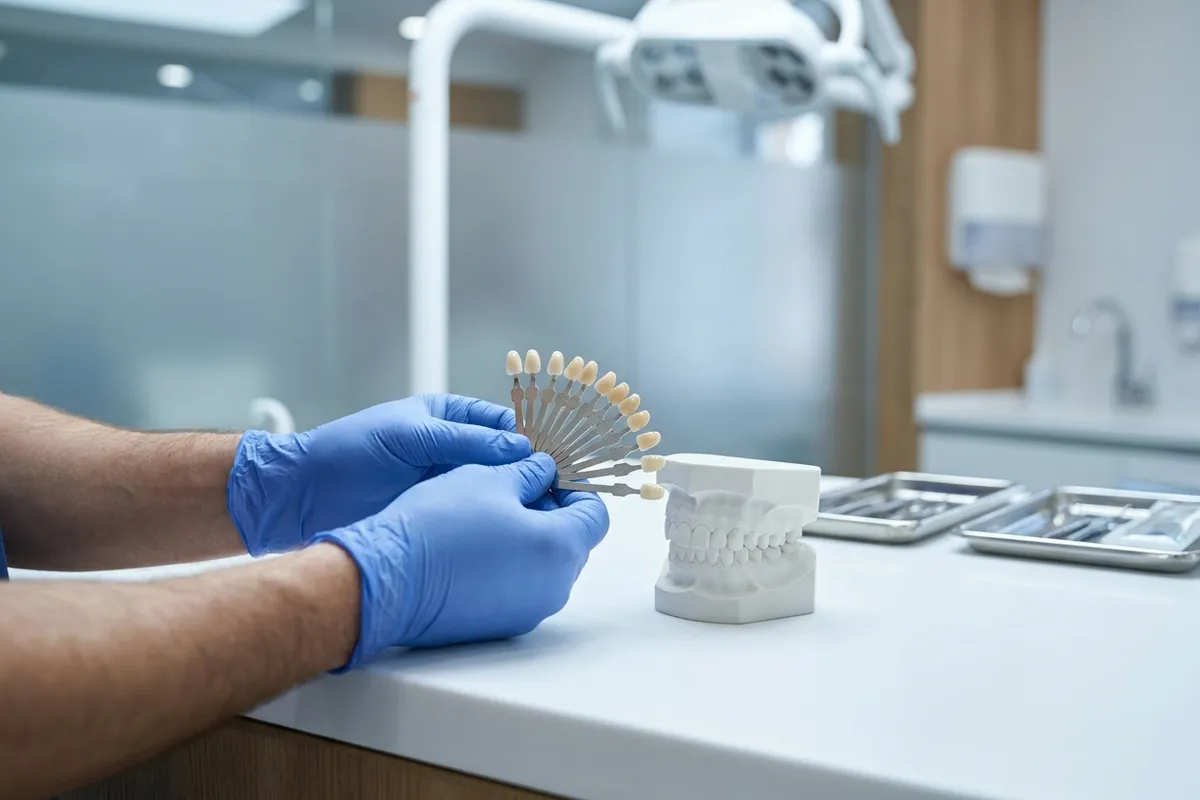
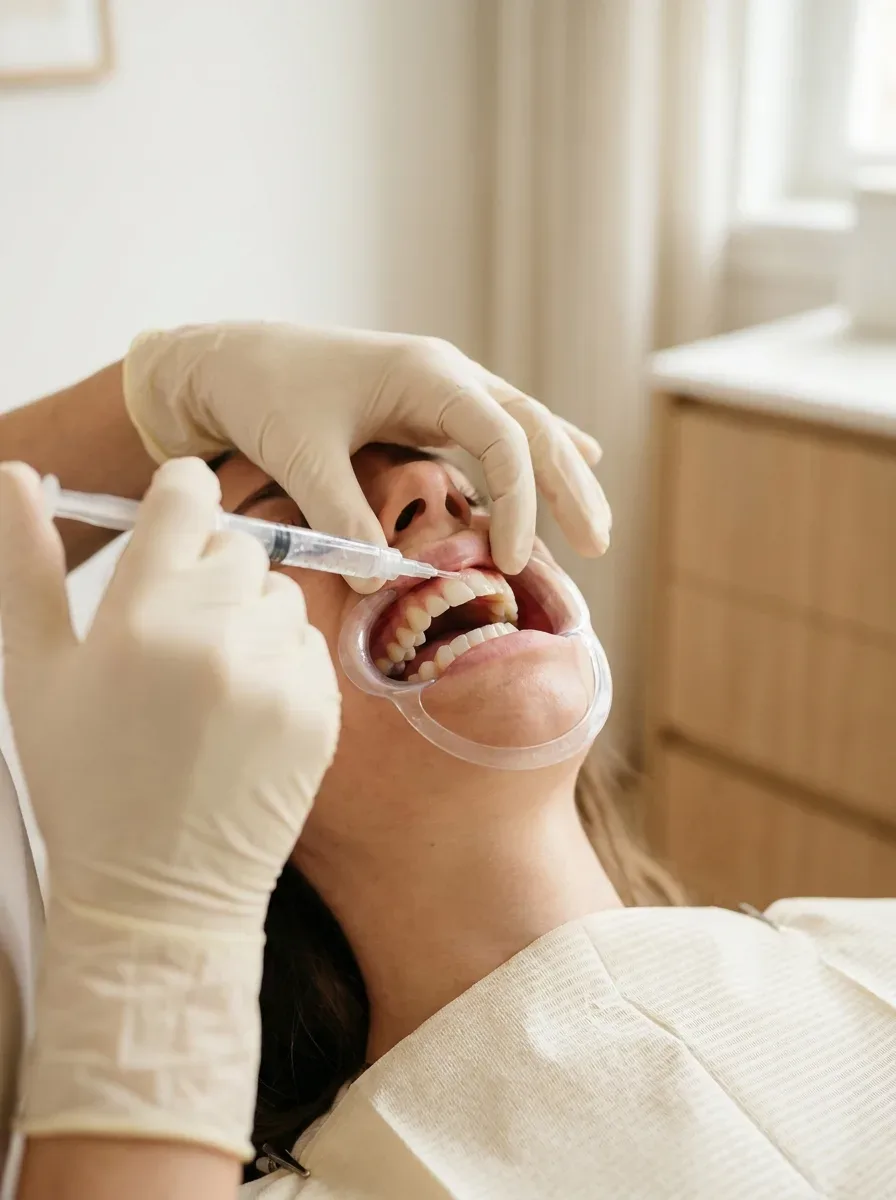
In-office whitening is applied under professional supervision with protection for surrounding tissues. A supervised take-home approach uses trays and product-specific instructions. Ask which methods are available and suitable for your case. Wear time and applications follow the recommended product and your response; more frequent use is not automatically better.
Suitable approaches may include supervised home bleaching, an office procedure, or managing removable surface stains first. These methods differ in concentration, application, and schedule; the clinic should explain the actual option offered for you. Do not combine products or extend exposure to accelerate the result. Bonding or veneers involve different changes and may be discussed when color alone is not the concern.
Aftercare and Maintaining Your Result
Temporary sensitivity and gum irritation can occur. Follow the provided instructions and contact us if discomfort persists. Maintain brushing, interdental cleaning, and appropriate cleaning visits, and discuss touch-ups rather than continually increasing treatment. Results vary with tooth characteristics and habits, and later restorations may need separate shade planning.
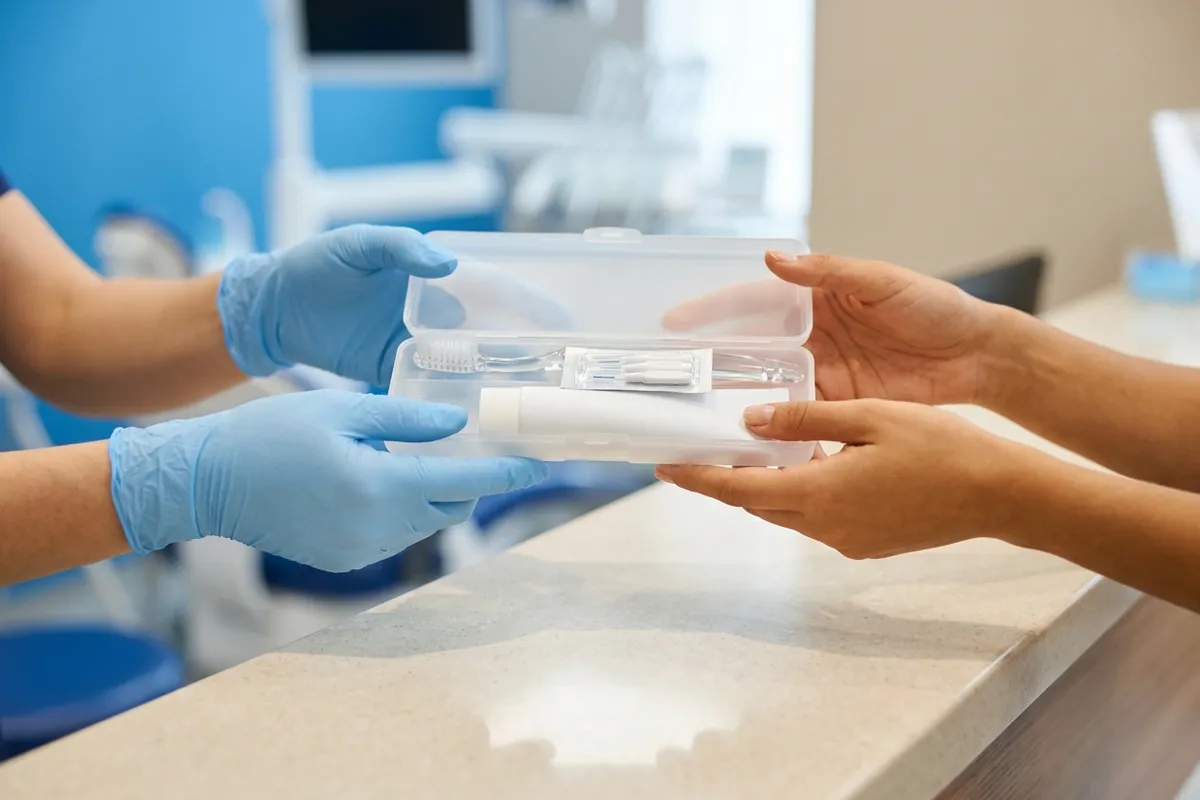
Use whitening only for the duration and frequency advised for your product. Temporary sensitivity can occur, but persistent pain or gum irritation warrants contact before continuing. Reducing staining exposures may help maintain the shade, while ordinary brushing and interdental cleaning remain necessary. Ask about reassessment before another course; repeating treatment indefinitely is not a substitute for reviewing a new color change.
- Use only the schedule provided for your product; extending wear or combining products can increase sensitivity without guaranteeing a better result.
- Report persistent pain or gum irritation, and ask whether treatment should pause or be modified before the next application.
- Discuss touch-ups and any later shade-matched restorations after the response has been reviewed rather than continually whitening without reassessment.
How it works
How whitening works
Usually a single visit.
 1
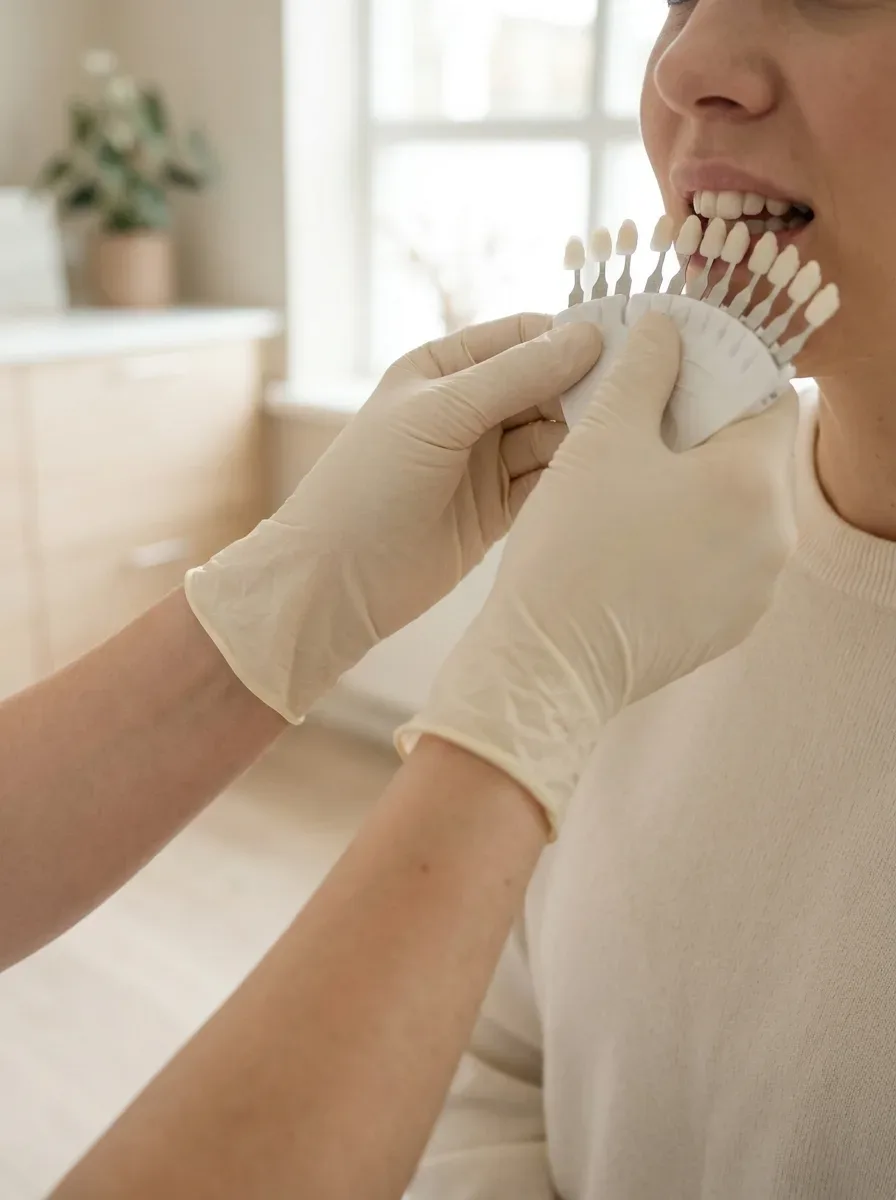
Your starting shade
Your current shade is recorded, so the change is something you can actually see.
 2
The treatment
The method and the teeth being treated are chosen after an exam and a discussion of your goal.
 3
The result
The shade is reviewed after treatment or at follow-up, depending on the method used.
Services
Other services
Everything we do, under one roof.



Questions
Frequently Asked Questions
Questions about teeth whitening? Ask us
About us
Why families choose Happy Smiles
At the same address in Columbia for over fifty years — started by Dr. Brockley, then Dr. Qilin Xu.
Fifty years, one address
543 Locust St has been the practice's home the whole time.
A dentist who knows you
Dr. Xu holds degrees in medicine and dentistry — the same doctor at every visit.
Routine to emergency
Exams and cleanings, fillings, dentures and veneers, whitening — and emergency care when something cannot wait.

Visit us
We're waiting for you in Columbia
543 Locust St
Columbia, PA 17512
- Monday – Thursday
- 8:00AM – 5:00PM