
Why Do I Have a Metallic Taste in My Mouth? 7 Common Causes
A persistent metallic taste in mouth tissues can come from gum irritation, dry mouth, or common medicines. Learn what triggers this distorted taste and how to find relief.
Metallic Taste at a Glance
A distorted taste in your mouth (dysgeusia) can make food and drinks taste unpleasant or leave an unexpected metallic tang. The table below outlines the most frequent reasons for this sensation, the clues that help identify each one, and simple ways to start finding relief.[1]
| Cause | The Clue | What Helps |
|---|---|---|
| Gum disease[2][3] | Swollen or inflamed gums | Treating gum inflammation |
| Inadequate dental hygiene[1][5] | Dental problems or oral pain | Brushing and dental cleanings |
| Dry mouth[1][4] | Thick saliva | Sipping water and sugar-free gum |
| Prescription medications[1][5] | Sensation begins after a new drug | Asking your doctor about alternatives |
| Colds and sinus infections[1][3][5] | Stuffy nose and reduced smell | Resting while the illness clears |
| Dental surgery[1][2][5] | Follows wisdom tooth extraction | Healing time and gentle oral care |
| Head and neck radiation[1][4] | Begins during cancer therapy | Saliva substitutes and recovery time |
Gum Disease and Inflammation
Swollen or inflamed gums (gingivitis) are a common reason for an altered oral sensation. Getting treatment for the underlying gum infection helps restore your normal sense of taste.[1][2][3]
Inadequate Oral Hygiene
Poor oral hygiene and dental problems can lead to mouth pain and a persistent bad or metallic taste in mouth tissues. Brushing your teeth, gently cleaning your tongue, and getting professional dental cleanings to remove calculus can improve your taste function.[1][5]
Dry Mouth and Reduced Saliva
Saliva washes your mouth and helps your taste buds function properly. When your salivary glands do not produce enough moisture (xerostomia), your saliva becomes thick, which can distort your sense of taste and create a phantom metallic tang. You can ease this dry feeling by sipping water frequently, chewing sugar-free gum, or using artificial saliva products.[1][2][4]
Prescription Medications
A wide variety of common medicines can alter how your taste buds perceive flavor. Drugs such as antibiotics, antihistamines, blood pressure medicines, heart drugs, and antidepressants are known to trigger taste changes. If a medication causes taste distortion, your healthcare provider may adjust the dose or switch you to a different prescription, but you should never stop taking a medicine on your own.[1][2][3][5]
Upper Respiratory and Sinus Infections
Because much of what you experience as taste depends on your sense of smell, sinus problems can alter your palate. Viral illnesses such as colds, the flu, or COVID-19 can disrupt your sense of taste and smell. Fortunately, taste disturbances caused by a cold or flu typically clear up on their own without treatment once the infection passes.[1][3][5]
Dental Surgery and Oral Trauma
Undergoing dental surgery, such as having a wisdom tooth extracted, can temporarily affect your taste function. Cuts in mouth tissues, oral burns, local anesthesia, or injuries to the mouth and head can disrupt the nerves that carry taste signals. In many cases, taste returns spontaneously as healing progresses and the injured tissues recover.[1][2][3][5]
Head and Neck Radiation Therapy
Undergoing radiation therapy for cancers of the head and neck can trigger taste disorders by damaging taste buds, sensory nerves, and salivary glands. Roughly 70% of head and neck radiation patients report altered taste, which usually begins two to three weeks into therapy. Normal taste perception typically returns 60 to 120 days after completing radiation treatment.[1][2][4]
When to See a Dentist
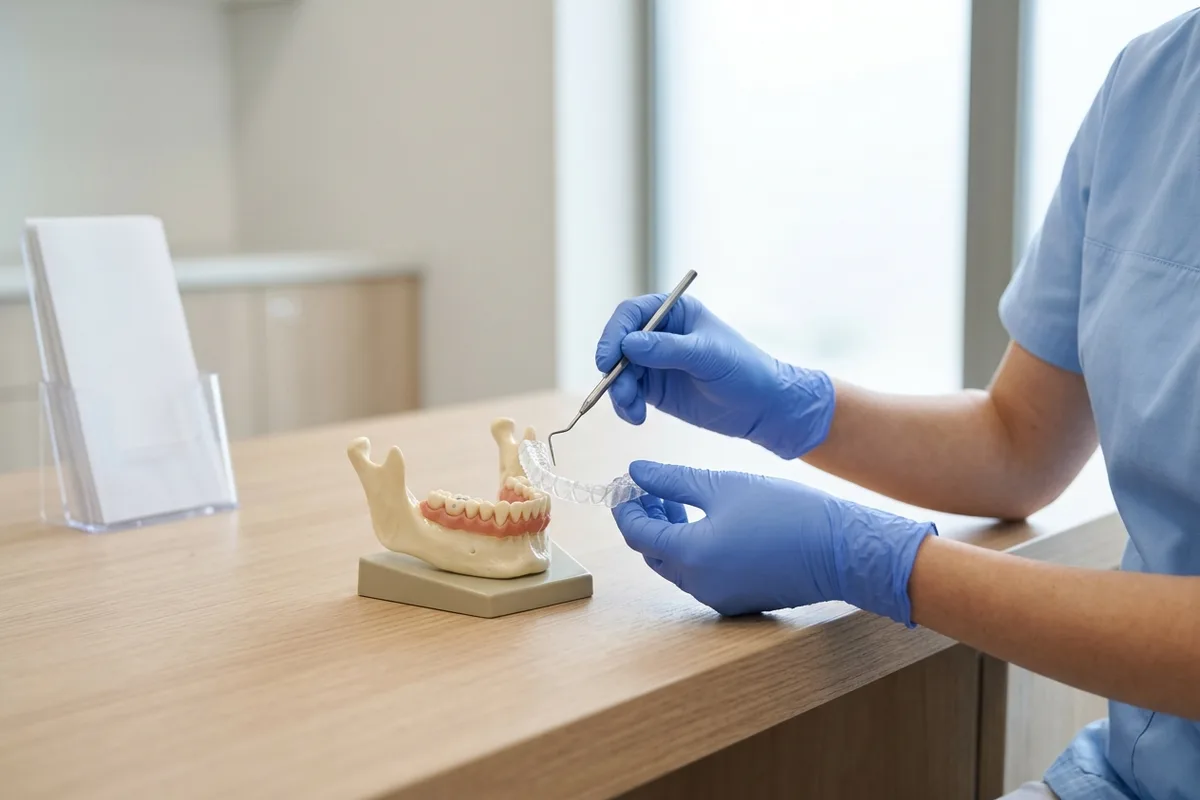
If your metallic taste lingers or occurs alongside swollen gums, dental problems, oral pain, or denture problems, schedule an evaluation with your dentist. A thorough dental examination can identify gum inflammation or calculus that home brushing cannot remove. At Happy Smiles at Columbia, you can discuss your symptoms with Dr. Qilin Xu to pinpoint the cause and restore your oral health.[1][3][5]
How to Prevent a Metallic Taste
You can reduce the risk of taste problems by maintaining consistent oral hygiene and protecting your mouth's natural moisture. Simple daily habits help clear away bacteria, keep your salivary glands working, and protect your palate.[1][3][4][5]
- Brush and floss thoroughly every day, and gently scrape your tongue to remove buildup.
- Visit your dentist for regular professional cleanings to remove hardened calculus.
- Sip water throughout the day and chew sugar-free gum to relieve dry mouth.
- Stop smoking cigars, pipes, or cigarettes, as heavy tobacco use impairs taste sensation.
- Season your meals with aromatic herbs and spices rather than adding excess salt or sugar.

Sources
- How do we taste…and why does it go wrong? — magazine.medlineplus.gov
- Ageusia — National Center for Biotechnology Information
- Taste - impaired — medlineplus.gov
- Oral Management of Patients Undergoing Radiation Therapy — National Center for Biotechnology Information
- Taste Disorders — National Institute of Dental and Craniofacial Research
Common questions
Frequently asked questions
Questions about your own smile?
If you are concerned about a lingering metallic taste, contact Happy Smiles at Columbia at 717-684-4666 to request an appointment and talk through your symptoms with Dr. Qilin Xu.
More Articles
View all Dental care
The Complete Guide to Full Mouth Dental Implants
Full mouth dental implants use sturdy metal posts in your jaw to hold complete arches of new teeth. Learn how these lifelike teeth work, what healing requires, and how to protect your smile.November 20, 2026 · 7 min read Dental care
The Complete Guide to Dental Crowns
A dental crown covers and protects a broken or heavily decayed tooth. Discover how crowns work, compare materials like porcelain and metal, and learn how to care for your smile.November 18, 2026 · 8 min read Dental care