
The Complete Guide to Dental Crowns
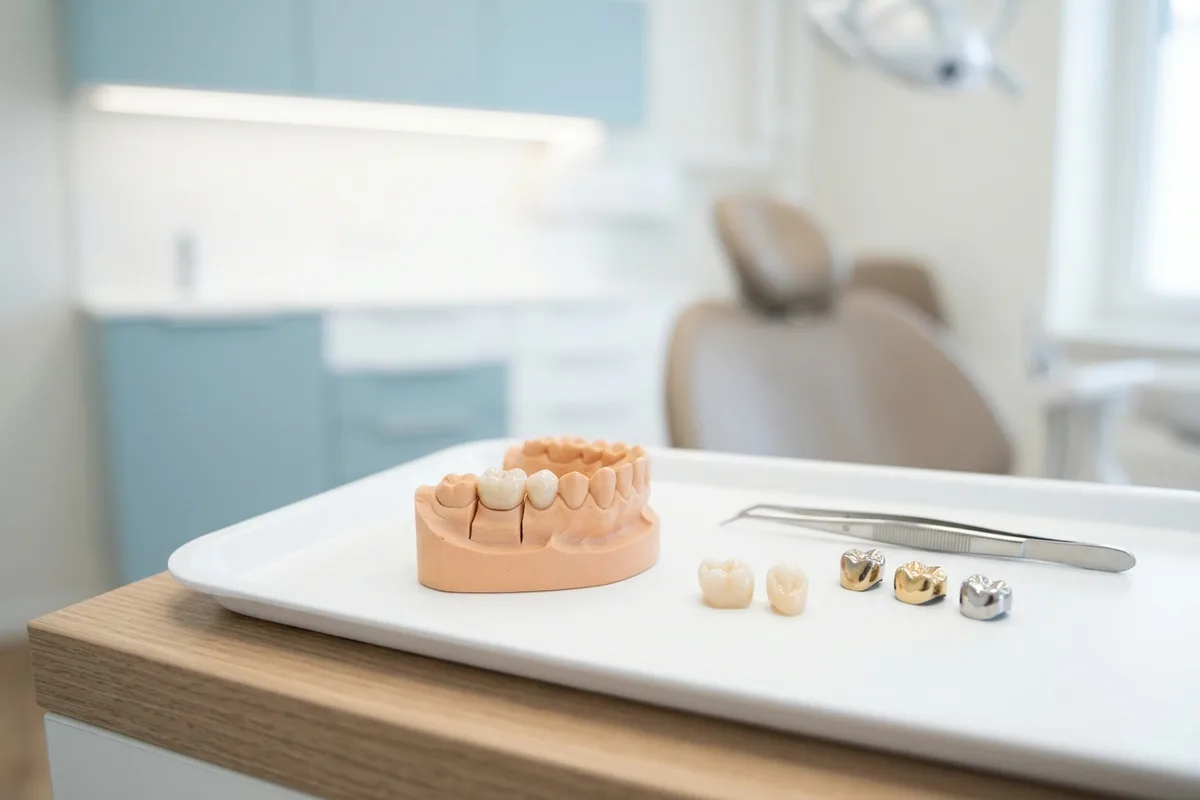
A dental crown covers and protects a broken or heavily decayed tooth. Discover how crowns work, compare materials like porcelain and metal, and learn how to care for your smile.
Dental Crowns at a Glance
A dental crown acts as a protective shield for a natural tooth that has suffered extensive structural harm. When a tooth is compromised by advanced decay or physical trauma, ordinary fillings may no longer offer sufficient support. Placing a crown over the visible tooth structure above the gumline restores chewing strength and prevents further damage. Because natural tooth structure underneath remains vulnerable to decay, understanding your care requirements is essential.[1][3]
- Treatment typically requires two dental visits to reshape the natural tooth, make impressions, and cement the permanent restoration.
- Most dental crowns last at least 5 years and can endure for 15 to 20 years when maintained with good oral hygiene.
- Restorations generally do not last an entire lifetime and may eventually need replacement.
- Daily home hygiene requires brushing twice every day and flossing daily to stop decay forming along the natural tooth beneath the cap.
- Crowns are made in a dental laboratory.
What Is a Dental Crown?
A dental crown is a custom-fitted cap designed to encase the entire visible portion of a damaged natural tooth above the gumline. Dentists use crowns when a tooth has suffered severe breakdown that smaller restorations cannot safely repair. While small cavities are treated by removing decay and placing direct composite or amalgam fillings, a crown is necessary when missing structure leaves the tooth too weak to support a simple filling.
Crowns also differ from other indirect laboratory-made restorations such as dental veneers and fixed bridges. A fixed bridge replaces completely missing teeth by using crowns anchored onto adjacent natural teeth to support artificial replacement teeth across the empty gap.[1][2][3]
Who It Suits
When a Dental Crown Is Recommended
A dental crown suits individuals who need to restore teeth with deep structural damage. Your dentist may recommend a crown if you have a cracked or broken tooth, severe enamel wear from grinding, or deep acid erosion. Crowns are also chosen to cover teeth with large cavities that fillings cannot stabilize, to align teeth, to restore dental implants, and to anchor bridges.[1][4][5]
When Other Treatments Are Needed
A crown may not be appropriate if a tooth has minimal damage or if the remaining core is too fragile. Very early decay appearing as a white spot can often be reversed with fluoride and saliva, while smaller cavities require only standard composite or amalgam fillings. Conversely, if the underlying tooth core is too weak to retain a restoration, or if the tooth nerve suffers severe injury, root canal therapy or extraction may be necessary.[1][3]
How a Dental Crown Works
Preparing the Tooth and Taking Impressions
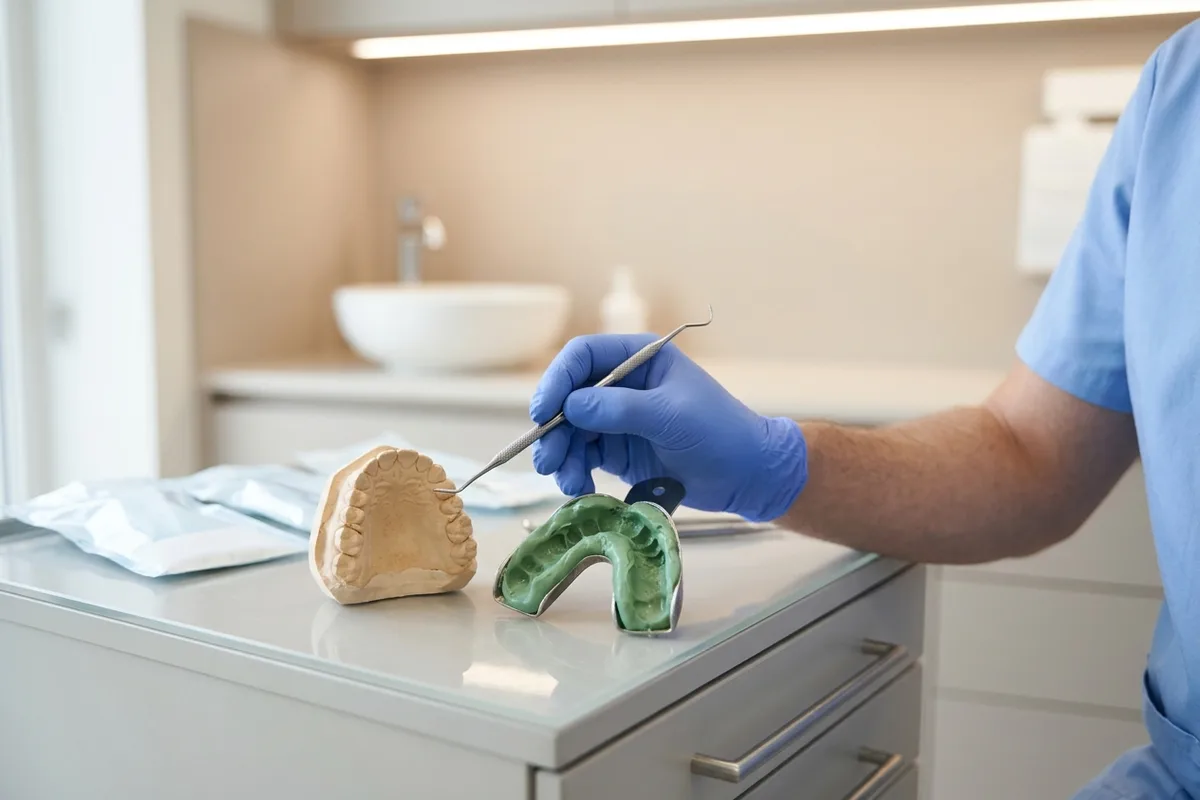
During your initial appointment, your dentist prepares the natural tooth by carefully reshaping its outer enamel to make space for the restoration. Your dentist then takes detailed impressions or digital measurements of the reshaped tooth and fits a temporary crown to protect the structure between appointments.[1][2]
Fabricating the Custom Crown
Your crown is custom crafted in a dental laboratory using techniques such as digital design, 3D printing, or precise milling. All restorative dental materials used in this process must meet strict U.S. Food and Drug Administration safety standards. While your custom crown is being produced, you will wear the temporary cap to protect the underlying tooth.[1][2]
Placing and Cementing the Crown
At your second visit, your dentist removes the temporary cap and checks the fit, shape, and color of the permanent restoration. Once the fit is confirmed, your dentist uses specialized dental bonding adhesives or cements to attach the crown securely to your natural tooth structure.[1][2]
Types and Options
Dentists use several restorative dental materials to fabricate crowns, each offering distinct benefits in strength, appearance, and longevity. The table below compares the primary materials used for indirect restorations.[2][3]
| Material | Key Characteristics | Ideal Uses | Expected Durability |
|---|---|---|---|
| Metal and Gold Alloys[1][2][3] | Resist chewing forces and rarely fracture, but have a visible metallic look | Teeth subject to heavy chewing stress | Can last 15 to 20 years with proper care |
| Porcelain and Ceramic[1][2][3] | Match natural tooth shade closely and suit individuals with metal allergies | Metal-sensitive patients | At least 5 years and often up to 15 to 20 years |
| Composite Resin[1][2][3] | Lower cost material, but wears down faster and fractures more easily | Short-term restorations or lower-stress applications | Generally shorter lifespan before replacement |
| Stainless Steel[1][3] | Prefabricated metal cap that provides immediate structural coverage | Temporary crowns or protective caps on children's baby teeth | Until primary tooth exfoliates or permanent cap is placed |
Choosing the Right Material
When selecting a crown material, your dentist evaluates the tooth's location, biting forces, and your cosmetic preferences. Metal alloys withstand intense chewing pressure without breaking. In contrast, all-ceramic and porcelain crowns blend seamlessly with adjacent natural teeth, making them well-suited for patients with metal allergies.[1][2][3]
Recovery and Care
What to Expect After Placement
After your permanent crown is cemented, you may notice mild sensitivity to hot and cold temperatures if the underlying tooth nerve is alive. This temporary sensitivity is common and typically fades over time as the tooth settles. If your bite feels uneven or if you develop persistent pain, your dentist should evaluate the restoration to ensure proper alignment.[1]
Long-Term Daily Care
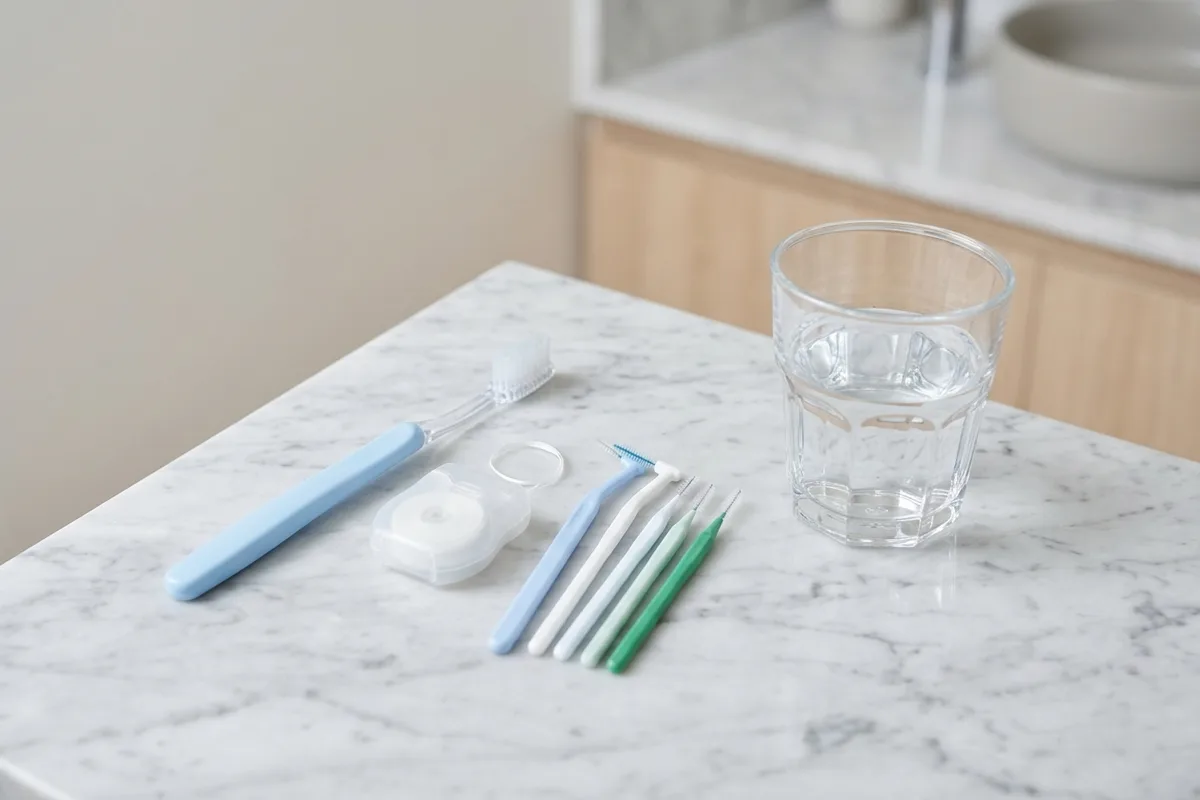
Even though a crown cannot develop cavities, the natural tooth underneath remains vulnerable to tooth decay. Protect your restoration by brushing twice a day with fluoride toothpaste and flossing once daily around the gumline. If you clench or grind your teeth during sleep, wearing a custom night guard prevents ceramic chipping and protects the restoration against heavy biting forces.[1][5]
Common Mistakes to Avoid
Caring for your crown properly prevents premature restoration failure and protects the natural tooth supporting it. Avoiding common daily mistakes helps ensure your restoration lasts for its full expected lifespan.[1][2]
- Lifting dental floss upward around a temporary crown: Pull dental floss sideways through the contact point to avoid accidentally dislodging the temporary cap.
- Chewing sticky foods on a temporary restoration: Chew on the opposite side of your mouth and steer clear of sticky treats until your permanent crown is placed.
- Brushing immediately after consuming acidic food or drinks: Wait at least one hour before brushing so your saliva can naturally neutralize acids and reharden enamel.
- Ignoring clenching or nighttime grinding habits: Wear a protective mouth guard to stop excessive biting forces from cracking the crown.
- Assuming a crowned tooth cannot decay: Brush twice daily and floss daily to stop plaque and bacteria from damaging the exposed natural tooth along the margin.
Risks
Nerve Sensitivity and Pulp Injury
Mild temperature sensitivity to hot and cold is common after placement, but it usually diminishes over time. However, if the tooth nerve becomes significantly inflamed or injured during preparation, the tooth may require root canal therapy or, in severe situations, extraction.[1]
Restoration Loosening and Tooth Loss
Over time, chewing stresses, oral bacteria, and saliva can degrade bonding cements, potentially causing a crown to loosen or detach if the underlying tooth structure is weak. Furthermore, replacing restorations repeatedly shaves away additional tooth structure, which increases long-term risk of tooth loss.[1][2]
What Affects the Cost
The overall cost of a dental crown depends on the material chosen for the restoration.
Before beginning any procedure, you can always ask your dentist for a detailed breakdown of fees and expected copayments. At your visit, you can talk through your treatment options and financial estimates with Dr. Qilin Xu at Happy Smiles at Columbia before beginning any work.[1][2]
Words You May Hear
When discussing your treatment plan with your dental team, you may encounter several clinical terms related to crowns and restorative care.[1][3][4][5]
- Dental crown: a tooth-shaped cap placed over a natural tooth above the gumline to restore its appearance and structural strength.
- Bruxism: a medical condition characterized by unconscious clenching, grinding, or gnashing of teeth during sleep or waking hours.
- Tooth erosion: the permanent breakdown and loss of protective tooth enamel caused by exposure to dietary acids.
- Dental cavity: permanent structural damage that develops when oral bacteria consume sugars and produce enamel-destroying acids.
- Dental bridge: an indirect restoration that replaces missing teeth by anchoring artificial replacement teeth to adjacent crowned teeth.
Sources
- Dental crowns — medlineplus.gov
- Dental Materials — National Institute of Dental and Craniofacial Research
- Dental Fillings — National Institute of Dental and Craniofacial Research
- Erosion: What You Eat and Drink Can Impact Teeth — American Dental Association
- Bruxism — National Institute of Dental and Craniofacial Research
Common questions
Frequently asked questions
Questions about your own smile?
If you have questions about repairing a damaged tooth or caring for a restoration, call Happy Smiles at Columbia at 717-684-4666 to request an appointment and discuss your dental crown options.
More Articles
View all Dental care
The Complete Guide to Full Mouth Dental Implants
Full mouth dental implants use sturdy metal posts in your jaw to hold complete arches of new teeth. Learn how these lifelike teeth work, what healing requires, and how to protect your smile.November 20, 2026 · 7 min read Dental care
Why Do I Have a Metallic Taste in My Mouth? 7 Common Causes
A persistent metallic taste in mouth tissues can come from gum irritation, dry mouth, or common medicines. Learn what triggers this distorted taste and how to find relief.November 19, 2026 · 5 min read Dental care