
The Complete Guide to Full Mouth Dental Implants
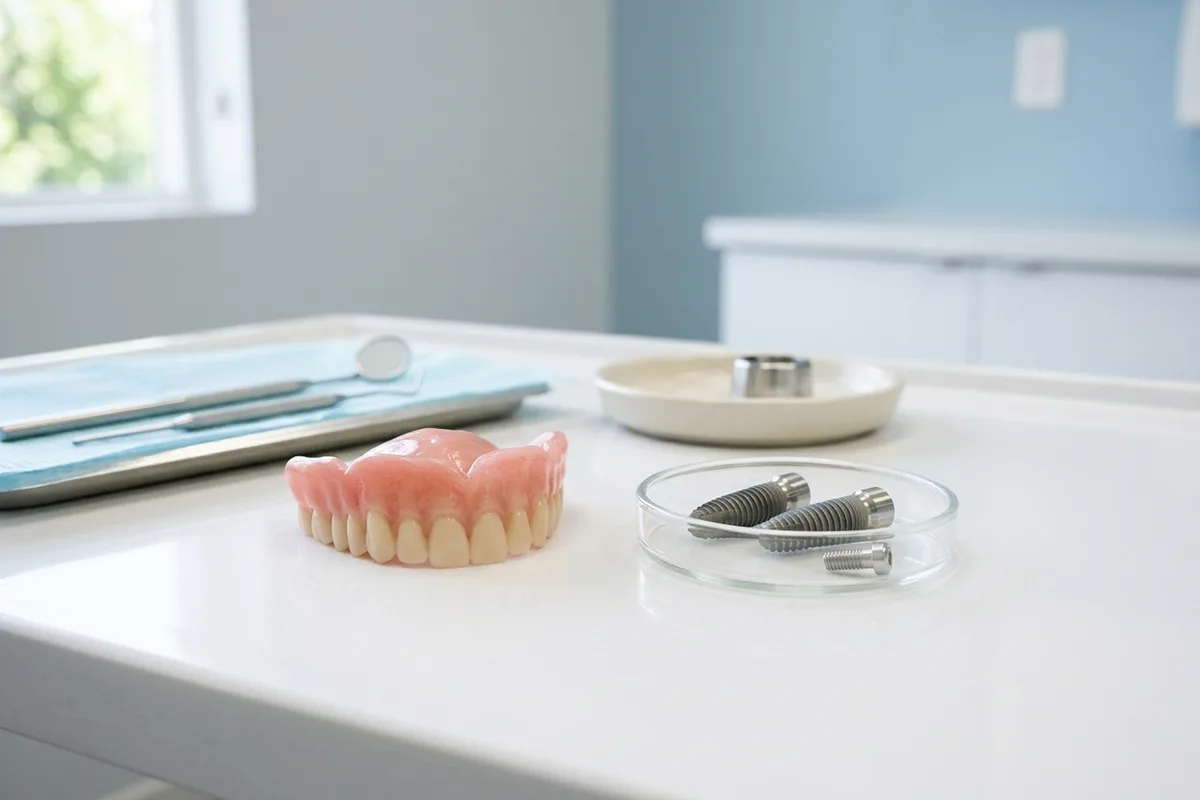
Full mouth dental implants use sturdy metal posts in your jaw to hold complete arches of new teeth. Learn how these lifelike teeth work, what healing requires, and how to protect your smile.
Full Mouth Dental Implants at a Glance
Losing all of your natural teeth can make facial muscles sag and change your outward look. Full mouth dental implants use body-safe titanium posts that anchor strong bridges or stable dentures to help fill out your facial profile. Today, improved dental care has made total tooth loss very rare among older adults. Learning the basic facts about these posts helps you understand what to expect during care.[1][2][4]
- Titanium posts fuse directly with your natural bone during healing in a process called osseointegration.
- Some people receive their implants and new teeth in a single visit, while others wait several months.
- Implants and bone graft materials must meet strict safety standards set by the Food and Drug Administration.
- Good general health matters far more than your age when your dentist checks if implants suit you.
- Implant-supported dentures help maintain jawbone volume and keep your lower false teeth stable.
What Are Full Mouth Dental Implants?
Full mouth dental implants are small metal posts placed into your jawbone to firmly anchor custom false teeth. These posts serve as artificial tooth roots for a whole upper or lower arch. They differ from standard false teeth that simply sit on top of your gums. Unlike traditional plates that may slip, posts stay anchored deep in bone to give you steady biting support.
Your dental team can connect custom bridges or snap-in dentures directly to these posts. Dental laboratories craft your custom teeth with modern digital design, milling tools, or 3D printing methods. Because the posts anchor firmly in bone, they help preserve your jaw contours and bring back a natural facial shape. This treatment helps you chew food, smile with confidence, and speak clearly again.[1][2][3]
Who It Suits
Dentists review your general health before recommending full mouth dental implants.[1][5]
People Who Are Good Candidates
This treatment suits people who have lost most or all of their teeth in one or both jaws. Your general health matters much more than your age when deciding if you can receive implants.[1][5]
People Who Need Extra Evaluation
Certain ongoing health conditions can make healing after surgery more difficult. For example, long-term illnesses such as diabetes or leukemia can slow recovery and may disqualify some people from getting implants. Using tobacco can also slow down how quickly your body heals after surgery. In these cases, a physician may need to carry out a medical check before you schedule dental surgery.[1]
How Full Mouth Dental Implants Work (Step by Step)
Getting full-arch implants involves clear clinical steps to protect your comfort and ensure solid healing.[1]
Step 1: Planning and Medical Review
Your dentist examines your mouth and reviews your general health. A physician may also conduct a medical check to make sure oral surgery is safe for you.[1]
Step 2: Placing the Metal Posts
Your dentist places body-safe titanium posts into your jawbone.[1][5]
Step 3: Healing and Short-Term Teeth
While your permanent teeth are crafted, you may wear short-term teeth to speak and eat. Your bone then fuses to the posts in a natural process called osseointegration.[1]
Step 4: Securing Your Custom Teeth
Your dental team attaches custom bridges or snap-in dentures to your healed posts. Labs build these long-lasting teeth using digital design, milling, or 3D printing.[1][3]
Types and Options
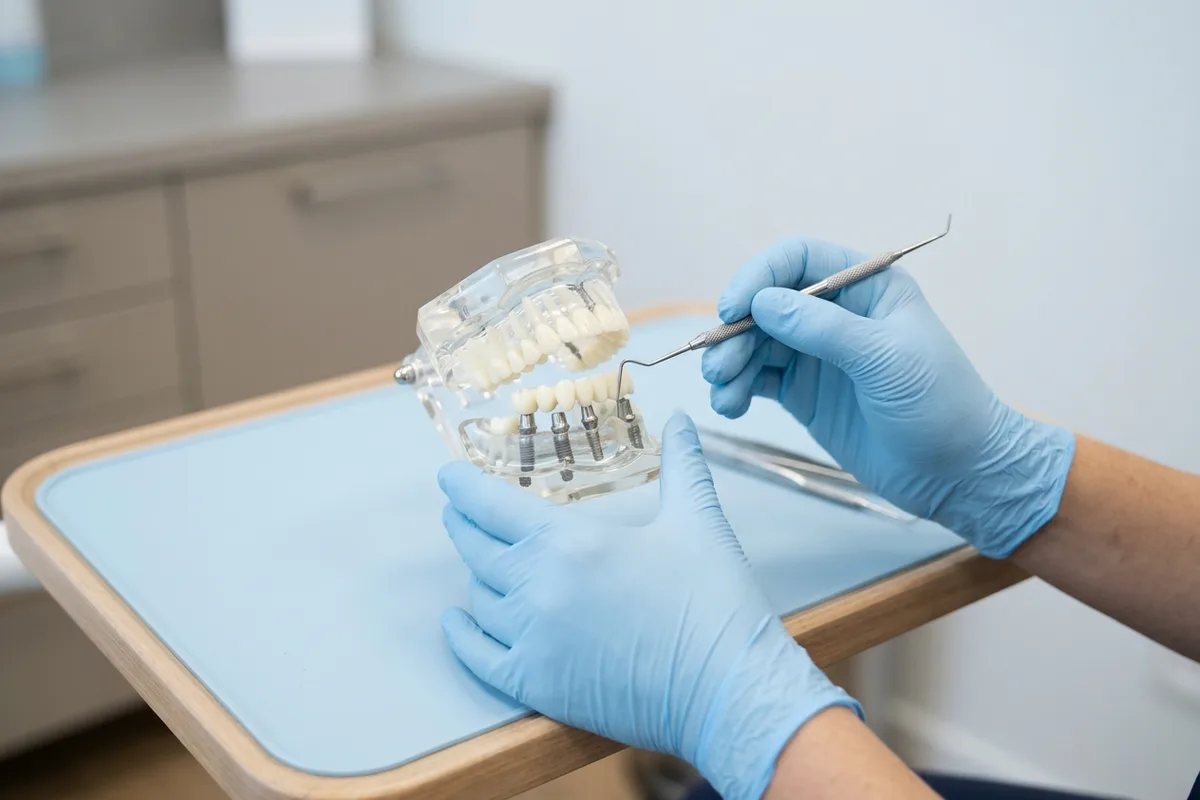
You can choose between fixed arches that remain in your mouth and dentures that snap onto posts. The table below outlines how these full-arch options compare.[1][2][4]
| Option | How It Stays in Place | Daily Cleaning Method | Bone Support |
|---|---|---|---|
| Fixed Implant Bridges[1] | Anchored directly to posts | Brushed in the mouth | Fuses with jawbone |
| Implant-Supported Dentures[2][4] | Snaps onto implant posts | Removed for daily cleaning | Helps keep jaw volume |
| Conventional Full Dentures[2] | Rests on gum tissue | Soaked in water nightly | Does not anchor in bone |
Fixed Arches Versus Snap-In Dentures
Fixed bridges attach to your implants, whereas implant-supported dentures snap securely onto posts but can be taken out at night for cleaning. Both styles give much better stability than traditional plates, which rest on your gums and may rely on adhesive pastes.[1][2][4]
Recovery and Care
Taking good care of your mouth after surgery protects your new implants and helps bone fuse smoothly.[1][2]
Healing Diet and Follow-Up Visits
During early healing, your dentist may suggest eating soft meals, cold foods, and warm soup. These gentle choices prevent extra pressure on your posts while bone grows around them. You will also visit your dentist for follow-up checks to make sure your tissues heal well and your bite fits properly.[1][2]
Daily Cleaning Routines
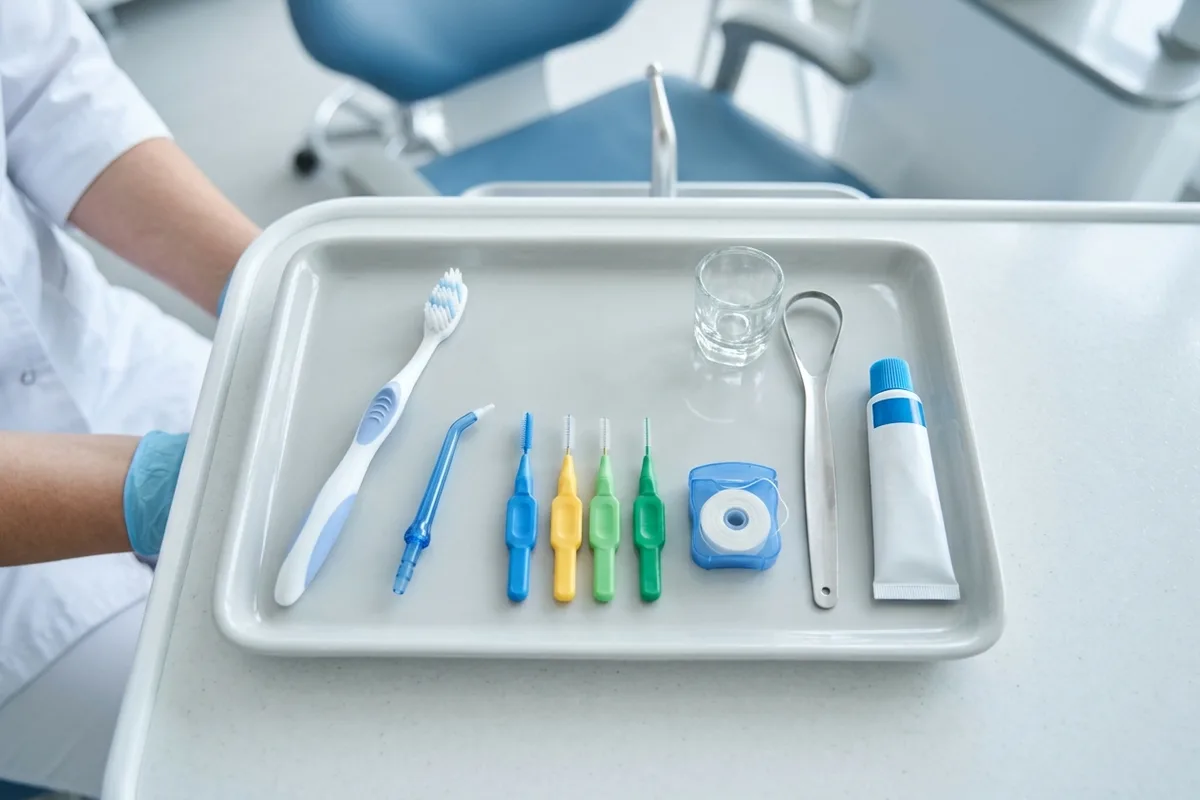
Every morning, brush your gums, tongue, and palate with a soft brush to clear away plaque. If you wear take-out dentures, brush them daily with a non-abrasive cleaner so you do not scratch them. When you take your dentures out at bedtime, keep them under water in a safe spot so they do not warp.[2]
Common Mistakes to Avoid
Avoiding everyday mistakes protects your surgical investment and keeps your supporting jawbone healthy. Simple habits make a big difference in how long your new teeth last.[1][2][3]
- Do not smoke or use tobacco, because using tobacco slows down how your mouth heals after surgery.
- Do not scrub false teeth with harsh abrasive cleansers that can scratch them.
- Do not let slip-out dentures dry out on the counter; always submerge them in clean water when resting.
- Do not chew hard items, because excessive physical stress can cause implants to fail.
- Do not ignore loose parts; contact your dentist promptly if your appliance feels damaged or unstable.
Risks
Like any oral surgery, full mouth dental implants involve certain recognized risks that you should weigh carefully. An implant can fail if surrounding tissues become swollen and inflamed, leading to gradual bone loss. Posts can also loosen if bone fails to integrate around them or if soft-tissue bacterial infections take hold.
An implant may have to be removed if specific warning signs appear during recovery. These signs include persistent pain, foreign body sensations, or long-lasting nerve numbness (dysesthesia). Loose posts, draining pus (suppuration), or dark bone loss shadows on x-rays (continuous radiolucency) can also mean an implant may need to be removed.[3][5]
What Affects the Cost
Several clinical factors shape the overall cost of full mouth dental implants. The total number of posts placed, the materials chosen for your teeth, and the number of office visits all influence your final fee. If your jaw has thin bone, needing bone-building surgery in the sinus cavity or bone graft materials will also adjust the total care plan.
Insurance coverage plays another major role in your out-of-pocket expenses. Medicare does not provide dental coverage, leaving many older adults without benefits once job-based plans end. Because implant care involves complex surgical steps, it can place a real strain on older adults with limited finances. Your dentist can outline your exact treatment plan and give you a clear fee before care begins.[1][3][4][5]
Words You May Hear
During consultations for full mouth dental implants, your dental team may use several clinical terms. Understanding these basic terms helps you feel confident as you discuss your options with Dr. Qilin Xu at Happy Smiles at Columbia.
- Osseointegration: the natural biological process where living jawbone grows around and fuses directly with a titanium implant post.
- Implant-supported denture: a full set of false teeth that snaps securely onto metal posts to give lower dentures better stability.
- Sinus augmentation: a specialized bone-building surgery performed in the upper jaw cavity to create enough bone depth for posts.
- Suppuration: the persistent draining of pus from infected gum tissue around an implant that requires clinical evaluation.
- Continuous radiolucency: dark shadows visible on dental x-rays showing continuous bone loss around an unstable implant post.
Sources
- Implants — American Dental Association
- Dentures — American Dental Association
- Dental Materials — National Institute of Dental and Craniofacial Research
- Oral Health Across the Lifespan: Older Adults — National Institute of Dental and Craniofacial Research
- MAUDE Adverse Event Report: JJGC S.A. IMPLANT 10; ENDOSSEOUS DENTAL IMPLANT — accessdata.fda.gov
Common questions
Frequently asked questions
Questions about your own smile?
Contact Happy Smiles at Columbia today to talk about your smile goals. You can meet with Dr. Qilin Xu to ask questions about your treatment options and plan your visit.
More Articles
View all Dental care
Why Do I Have a Metallic Taste in My Mouth? 7 Common Causes
A persistent metallic taste in mouth tissues can come from gum irritation, dry mouth, or common medicines. Learn what triggers this distorted taste and how to find relief.November 19, 2026 · 5 min read Dental care
The Complete Guide to Dental Crowns
A dental crown covers and protects a broken or heavily decayed tooth. Discover how crowns work, compare materials like porcelain and metal, and learn how to care for your smile.November 18, 2026 · 8 min read Dental care