
Dental Implant vs Dental Bridge: Which Is Better for You?
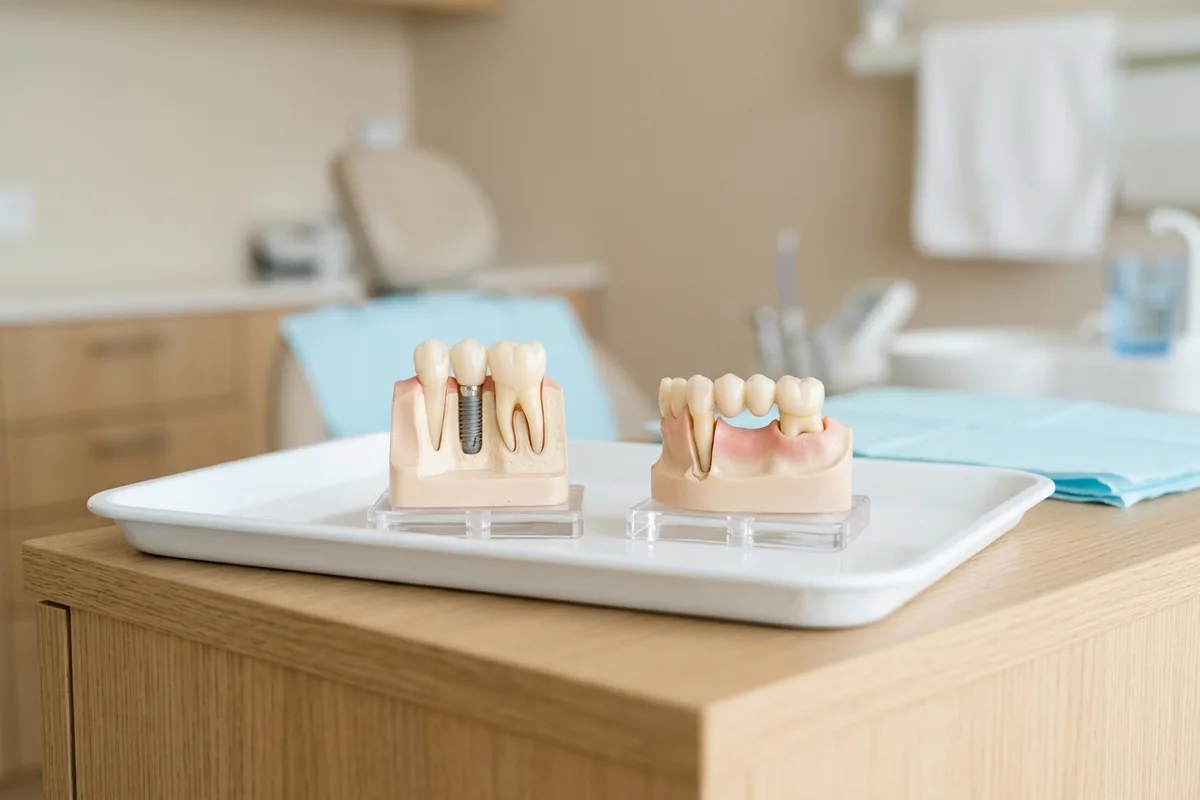
Replacing a missing tooth protects your bite, keeps nearby teeth in line, and supports your jawbone. Learn how implants and bridges compare so you can choose with confidence.
The Short Verdict (Fast Answer)
Choosing between an implant and a bridge comes down to your jawbone, your general health, and your neighboring teeth. A dental implant is often ideal when the teeth next to the empty gap are healthy and free of fillings. A dental bridge makes great sense if you want a faster fix or if your neighbor teeth already need crowns.[1][2][5]
- Choose dental implants if you want to leave healthy neighboring teeth untouched and protect your jaw from bone loss.
- Choose dental implants if you have good physical health and want a tooth replacement that never gets cavities.
- Choose a dental bridge if you want your new tooth placed in just a few weeks without jaw surgery.
- Choose a dental bridge if your nearby anchor teeth already need crowns or strong repairs.
Dental Implant vs Dental Bridge Side by Side
Both treatments replace missing teeth and help you chew normally, but they work in very different ways. This side-by-side comparison shows how the two treatments compare across key areas of care and daily life.[3]
| Feature | Dental Implant | Dental Bridge |
|---|---|---|
| Main support[1][2] | Titanium post set directly into your jawbone | Neighboring teeth capped with crowns on both sides |
| Effect on nearby teeth[1][2][5] | Leaves healthy neighboring enamel untouched | Requires filing down nearby teeth to fit support crowns |
| Jawbone protection[3][5] | Stimulates jawbone to help stop bone shrinkage | Does not stop bone loss under the empty space |
| Resistance to decay[2][5] | Made of materials that cannot develop cavities | Natural anchor teeth under crowns can still get decay |
| Treatment timeline[1][4][5] | Takes several months or up to a year for bone fusion | Usually finishes in days, hours, or a few weeks |
| Daily home care[2][5] | Brush and floss normally, or use small interdental brushes | Requires cleaning around crowns and under the replacement tooth |
| Health considerations[1][2][5] | Needs good overall health; delayed by tobacco or diabetes | Focuses mainly on having strong anchor teeth |
Dental Implants: Pros and Cons
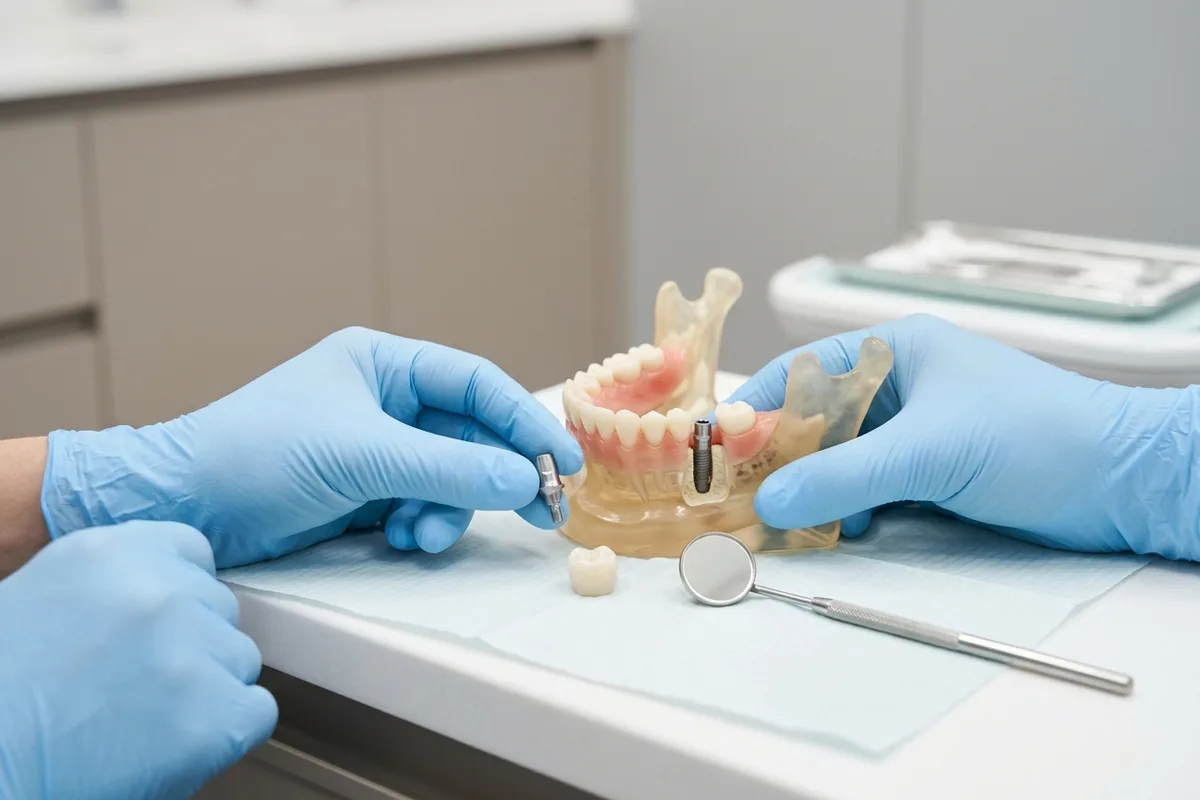
A dental implant uses a small titanium post that your dentist places into your jawbone like a wall anchor. Over several months, your natural bone fuses directly to the post surface (osseointegration) to build a sturdy base. Once the bone heals, a connecting piece (abutment) holds a custom crown that looks and chews like a real tooth.[1][2][3][5]
Pros of Dental Implants
Implants offer clear long-term benefits because they stand entirely on their own inside your jaw. Patients often choose implants because they protect both the jawbone and the surrounding natural teeth.[1][4][5]
- Preserves healthy neighbor teeth by avoiding the need to grind down surrounding enamel.
- Stimulates your jaw to prevent bone shrinkage (resorption) and loss of jaw height.
- Cannot get cavities or tooth decay because the post and crown use synthetic materials.
- Provides high long-term success rates that match or beat other tooth replacement options.
- Looks and functions the most like real natural teeth when you speak and eat.
Cons of Dental Implants
While implants provide durable tooth replacement, the process involves surgery and patience. It helps to understand the time and health needs before you begin.[1][5]
- Requires oral surgery and several months for the bone to grow tightly around the post.
- Requires a soft food diet, cold foods, and warm soups while your mouth heals from surgery.
- May cost more than other choices when replacing multiple missing teeth.
- Can be delayed or ruled out by long-term conditions like diabetes, heart disease, or tobacco use.
- May require extra bone or tissue grafting if your jaw lacks enough height or thickness.
Dental Bridges: Pros and Cons
A traditional dental bridge spans the gap where one or more teeth are missing. Your dentist files down the neighboring teeth on both sides of the gap to serve as anchors (abutments). Crowns are placed over these anchor teeth and joined to a false tooth that rests in the empty space.[2][4]
Pros of Dental Bridges
A dental bridge remains a trusted choice for many smiles, especially in our crowns and bridges treatments. Here are the primary reasons patients select a bridge to restore missing teeth.[2][4][5]
- Replaces missing teeth without the need for jaw surgery or bone healing time.
- Can be made in just days or hours using modern digital scans and computer design.
- Costs about the same as a single-tooth implant while avoiding surgical costs.
- Uses porcelain baked over gold alloy or metal-free ceramic for great strength and lifelike appearance.
- Strengthens neighboring teeth that already suffer from large fillings or heavy wear.
Cons of Dental Bridges
Bridges also come with a few trade-offs that you should consider carefully. Because a bridge relies on nearby teeth, it affects more than just the empty space.[1][2][3][5]
- Requires permanent removal of healthy enamel from the teeth on either side of the gap.
- Does not stimulate the jawbone under the gap, which can allow bone shrinkage over time.
- Leaves anchor teeth open to the risk of new tooth decay under the edges of the crowns.
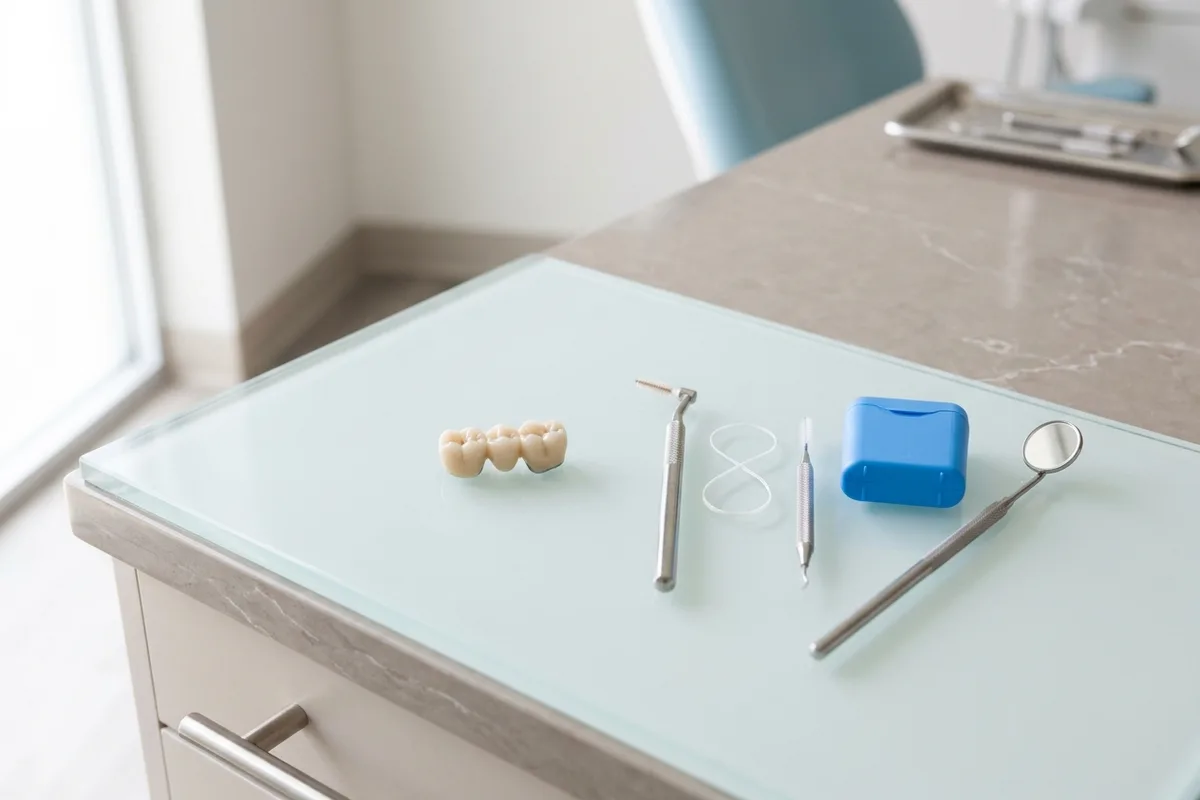
- Requires extra effort to thread floss beneath the false tooth to keep gums healthy.
Which One Fits You
Every mouth has unique needs, so your dentist will examine the gap, your bone, and nearby teeth. Choosing the right path comes down to your personal medical history and smile goals.[2]
When an Implant Fits Best
An implant is usually the top choice if your neighboring teeth are sound and healthy. Shaving down virgin enamel just to hold a bridge can weaken teeth that might otherwise last for decades. If you have good general health, healthy gums, and adequate jawbone, an implant protects your smile without altering nearby teeth.[1][3][4][5]
When a Dental Bridge Fits Best
A bridge is often the better route if the teeth next to your gap already need crowns or large fillings. In that case, placing crowns on them solves two dental needs at once. A bridge is also ideal if medical conditions make oral surgery unwise or if you want your new tooth finished quickly.[1][2][4][5]
Deciding With Your Dentist
A one-on-one talk with your dentist is the best way to choose between these two dependable options. At your visit, you can review digital scans, talk through your medical background, and ask about the total timeline. You can ask Dr. Qilin Xu at Happy Smiles at Columbia how each choice fits your everyday lifestyle.
To help guide your conversation, here are a few practical questions you might bring along to your next appointment:[2][4][5]
- Are my neighbor teeth healthy enough to leave alone, or do they already need crowns?
- Do I have enough healthy jawbone height to support a titanium implant post?
- How long would my total treatment take from my first visit to the final tooth?
- What will my total out-of-pocket costs look like after factoring in my dental insurance?
- How will my medical history or daily habits impact my healing after treatment?
Factor by Factor Comparison
Looking closely at key factors helps clarify how each tooth replacement affects your oral health over time. Here is how implants and bridges differ on the details that matter most.
Impact on Neighboring Teeth
Implants protect your surrounding teeth because they do not rely on them for strength. Traditional bridgework requires grinding away enamel from anchor teeth so crowns can fit over them. If those anchor teeth are completely healthy, preserving their enamel with an implant is a major advantage.[1][2][4][5]
Jawbone Health and Bone Loss
When you lose a tooth, the bone in your jaw can slowly shrink away where the root used to be. Dental implants stimulate your jawbone directly, which prevents this bone loss (resorption) and keeps your jaw strong. A bridge replaces the visible crown above the gumline, but bone underneath the bridge can still slowly shrink.[3][5]
Treatment Timeline and Visits
Bridges are faster because modern digital scanning can help dentists fabricate crowns and bridges in days or hours. Implants take more patience because the bone must grow securely around the post over weeks to months. While some patients get a temporary tooth right away, total implant care can take several months or up to a full year.[1][4][5]
Other Options to Consider
Standard implants and fixed bridges are not your only choices for filling an empty space. Depending on your gap and tooth health, your dentist may discuss alternative designs.[3]
Resin-Bonded Bridges
A resin-bonded bridge (Maryland bridge) attaches a replacement tooth using small metal wings glued to the backs of neighboring teeth. This design avoids heavy filing of anchor teeth. It works best in areas where chewing pressure is light, giving you another bridge choice that protects natural enamel.[2]
Cantilever Bridges
A cantilever bridge replaces a missing tooth when there are anchor teeth on only one side of the gap. This setup requires at least two neighboring teeth to remain stable and support the replacement tooth. It provides a fixed option when an anchor tooth is missing on the opposite side.[2]
Sources
- Implants — American Dental Association
- In brief: Crowns, bridges, implants: What types of replacement teeth are there? — National Center for Biotechnology Information
- Common dental concerns for older adults — American Dental Association
- Crowns & Bridges — dentistry.uic.edu
- Guide to Dental Implants: A Popular Option for Tooth Replacement — dentistry.uic.edu
Common questions
Frequently asked questions
Questions about your own smile?
Ready to restore your smile? Contact Happy Smiles at Columbia at 717-684-4666 or visit us in Columbia, PA, to talk with our team about your tooth replacement options.
More Articles
View all Dental care
What Happens at a Dental Cleaning and Exam for Healthy Teeth
A routine dental visit combines professional cleaning with a detailed mouth checkup. Learn what happens at a dental cleaning and exam to protect your teeth, gums, and overall health.October 27, 2026 · 5 min read Dental care
The Complete Guide to Dentures
Dentures replace missing natural teeth to support chewing and speaking. Explore how complete and partial appliances function, proper daily cleansing routines, ways to protect delicate gum tissues, and what influences total prosthetic expenses.October 22, 2026 · 8 min read Dental care