
The Complete Guide to Full Mouth Dental Implants
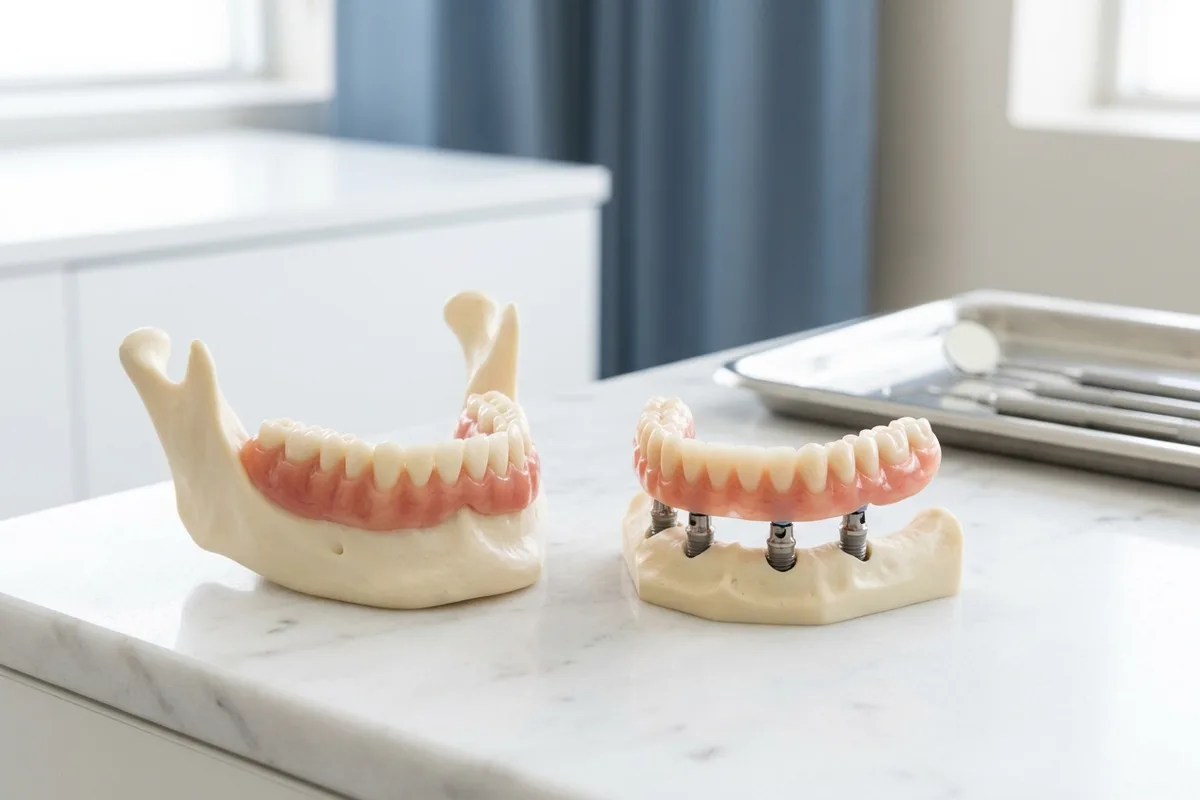
Discover how full mouth dental implants secure new teeth to your jawbone, what recovery feels like, and how your dentist plans your care for long-lasting health.
Full Mouth Dental Implants at a Glance (Key Facts)
Full mouth dental implants give you a secure way to replace an entire set of teeth in your upper or lower jaw. Metal posts go into your bone, creating sturdy roots for custom teeth made in a dental lab. This treatment restores your ability to chew food comfortably, and it protects you from having to trim down healthy teeth.[1][2]
- Dental implants are titanium posts placed into your jawbone to anchor new teeth (s1-f1).
- A full-arch bridge or hybrid plate requires at least four supporting posts to share biting forces (s5-f2).
- Your natural bone can take up to several months to firmly grow around the metal posts (s1-f5).
- Placing posts needs at least one millimeter of sound bone thickness on both the tongue and cheek sides (s3-f5).
- Implant care requires a lower front jaw height of at least one centimeter before posts can stand alone (s3-f4).
- Implants are only suitable for people aged 16 and older whose jawbones have fully grown (s3-f6).
What Are Full Mouth Dental Implants? (Quick Definition)
Full mouth dental implants use small titanium posts placed into your upper or lower jaw to support an entire row of teeth. As your jaw heals, natural bone bonds directly to the metal in a process called osseointegration. This bonding gives your new teeth firm support so you can speak clearly and chew your food without slips.
Unlike standard dentures that rest loose on your gums and rely on suction, implants lock your teeth directly to the bone. They also differ from standard dental bridges because your dentist does not need to grind down any healthy teeth. The final teeth can be permanently screwed in place or made to snap off for daily cleaning.[1][4]
Who It Suits
People Who Benefit Most
This care helps adults who have lost all their teeth in an arch or face severe tooth trouble. It is a helpful option if you gag easily or have allergies to standard denture plastics. Your overall general health matters far more than your age when your dentist reviews your smile.
You also need healthy gum tissue and enough bone thickness to wrap around each post. Being ready to brush thoroughly and clean around your new teeth every single day helps protect your results for years to come.[1][3]
When Treatment May Not Work
Certain health conditions make implant surgery risky. Ongoing bone infections, unmanaged bleeding problems, or untreated gum disease can keep the metal posts from staying secure. Long-term medical issues like diabetes or leukemia can also slow down how your body heals after surgery.
Habits like heavy tooth grinding or cheek chewing place harsh stress on the posts and count as clear reasons to avoid treatment. In addition, using tobacco slows your healing and raises the chance that an implant might fail.[1][3]
How Full Mouth Dental Implants Work (Step by Step)
Exam and Digital Planning
Your dentist first checks your mouth and takes detailed images of your jawbone. Modern labs use digital planning and three-dimensional printing to map where each post should go. If your bone has receded, your dentist may plan bone grafting to rebuild lost bone height.[2][3]
Surgical Post Placement
Your dentist gently places the titanium posts into your jawbone beneath the gumline. To fit your natural bone shape, the dentist may use a mix of straight and angled posts. A full arch needs at least four posts to properly share your biting pressure.[1][5]
Bone Healing and Interim Teeth
Your bone grows around the metal posts over several months to create strong roots. While your permanent teeth are crafted in a dental lab, your dentist may give you an interim bridge or denture so you can eat and speak.[1]
Attaching Your New Teeth
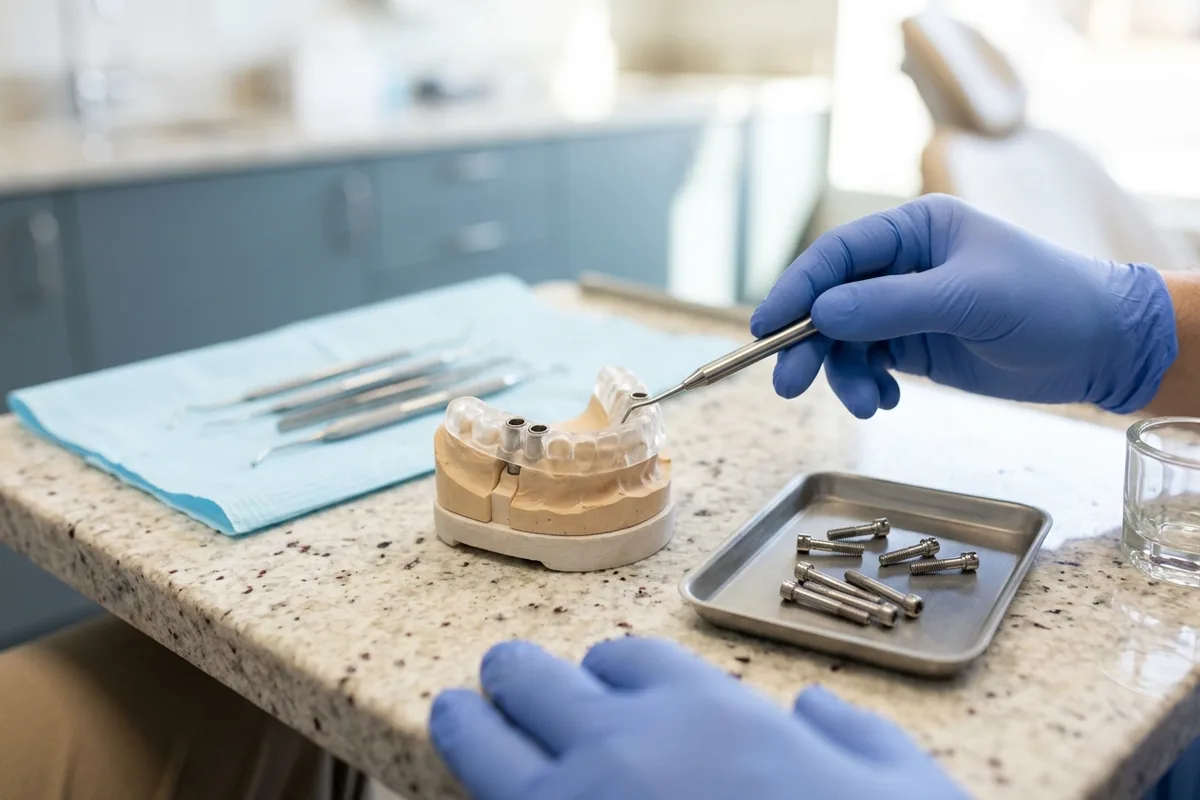
Once your jaw fully bonds with the posts, your dentist attaches your custom bridge or hybrid plate. The teeth are carefully adjusted so your bite feels balanced, comfortable, and natural across your entire mouth.[1][2][5]
Types and Options
Your dentist can build your new smile in different ways depending on your bone shape, your daily habits, and your personal needs. Review the table below to compare the common ways dentists replace a full row of teeth.[1][5]
| Option | How It Attaches | Best Suited For | Cleaning Method |
|---|---|---|---|
| Fixed Hybrid Denture[1][5] | Screwed tightly onto four or more posts | People wanting teeth that do not come out | Cleaned in the mouth with special floss and brushes |
| Snap-On Implant Denture[1][4] | Clips onto posts and unclips by hand | People wanting easy access for daily care | Removed by hand and soaked overnight |
| Standard Gum-Rested Denture[4] | Rests on pink gums with natural suction | People unable to undergo bone surgery | Taken out after meals and kept moist overnight |
Fixed Bridges Versus Snap-On Plates
A fixed hybrid plate uses a metal bar coated with pink acrylic and artificial teeth that stays locked in your mouth. Snap-on plates give you great chewing grip, but you can still pop them out to brush your gums before bedtime. Both designs spread biting force across your jaw far better than loose plates that rest only on your gums.[4][5]
Recovery and Care
What to Eat and Expect
Right after your surgery, your mouth needs time to rest without heavy biting pressure. Your dentist might advise eating cold items, warm soup, and soft foods that do not require hard chewing. Taking care during these first weeks lets your bone bond securely to the new metal posts.[1][2]
Protecting Your New Smile
Even though artificial teeth cannot get cavities, the living gums around your posts can still get sick. Plaque buildup causes swelling in the gums around implants (peri-implant mucositis), which can lead to deep pockets and bone loss. Clean beneath your teeth each day, and visit your dentist regularly to check your screws and bite.[3][5]
Common Mistakes to Avoid
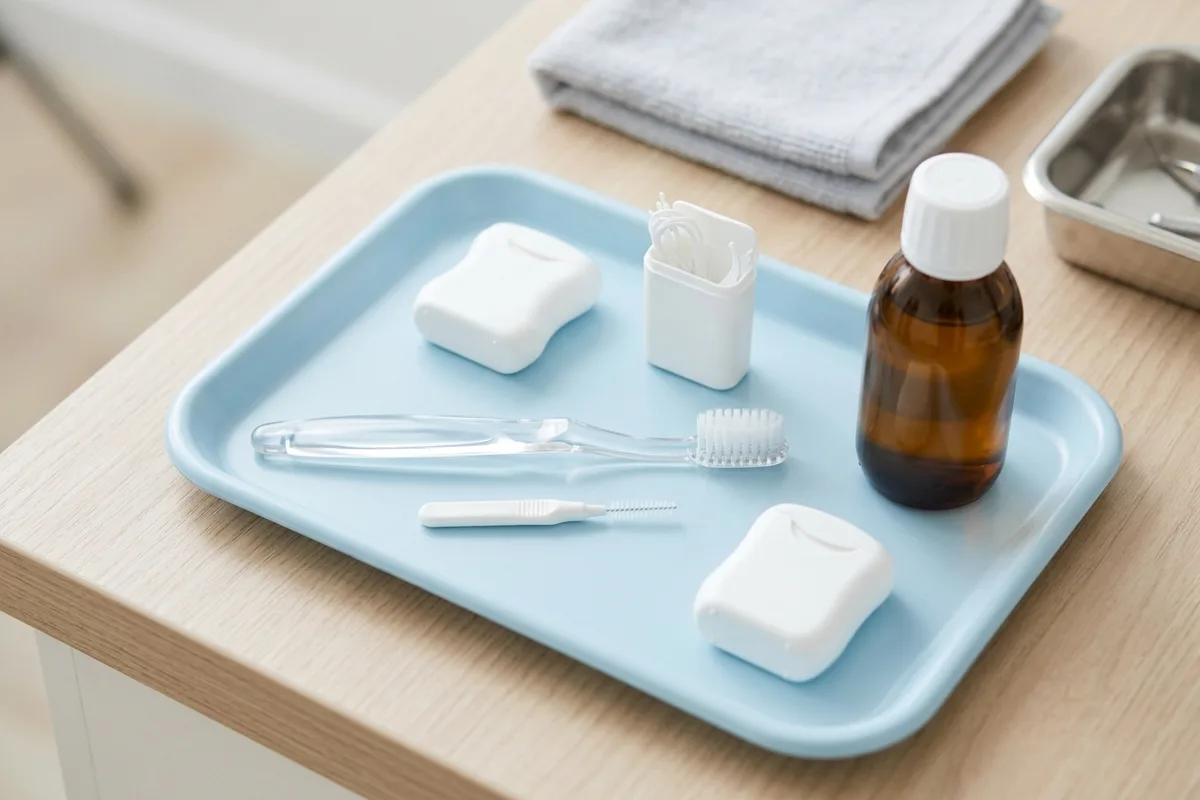
Caring for full mouth dental implants requires good habits at home to keep your gums healthy and avoid cracked teeth. Small mistakes can harm the bond in your jaw or crack the pink plastic base.[3][4][5]
- Skipping daily flossing allows plaque to cause gum swelling around your posts (s3-f10).
- Using regular, gritty toothpaste or harsh household cleaners can scratch dental plastic (s4-f6).
- Smoking or using tobacco slows blood flow and makes it hard for your jaw to heal (s1-f10).
- Trying to fix cracked pink acrylic with home glue can harm your mouth and ruin the teeth (s4-f10).
- Ignoring a loose screw or a worn tooth can cause the whole plastic bridge to snap (s5-f3, s5-f4).
Risks
While implants have strong safety records cleared by the Food and Drug Administration, complications can still happen. The most frequent issues with full-arch plates are worn plastic teeth, cracked acrylic, loose screws, or lost screw caps. Having fewer posts in your jaw raises mechanical stress and makes broken teeth more likely.
Infection and poor soft-tissue sealing around your posts can also cause bone loss or implant failure over time. In addition, chewing too hard or grinding your teeth can break the bone bond. Regular visits to your dentist help catch loose parts or gum trouble before deep damage sets in.[2][5]
What Affects the Cost
The overall cost of full mouth dental implants depends on the specific steps needed to rebuild your mouth. If you need extractions, bone grafting, or protective barriers to rebuild thin bone, those extra surgical visits change the price. The total number of posts placed in each jaw also shapes the final fee.
The materials you select for your teeth make a difference as well. Teeth crafted with custom milling or digital printing carry different lab expenses than standard acrylic teeth on a metal bar. Wearing an interim bridge while your permanent teeth are made can also change your total investment.
Your dental insurance coverage and how many follow-up visits you need will influence your out-of-pocket costs. At Happy Smiles at Columbia, you can speak with your dentist about your treatment goals and ask for a clear fee estimate before any work begins.[1][2][5]
Alternatives to Full Mouth Dental Implants
Standard Complete Dentures
Standard full dentures rest directly over your natural gum ridges without any metal posts in the jaw. As your jawbone shrinks over time, these plates can loosen and cause painful sore spots that need dentist adjustments. They must stay moist in soaking solution overnight so they do not warp.[4]
Removable Partial Dentures
If you still keep several healthy natural teeth, a removable partial denture can fill the empty spaces. These devices use metal clasps or discreet attachments that grip your remaining teeth to stay secure. Biting down to snap them into place can bend or snap the metal clasps.[4]
Sources
- Implants — American Dental Association
- Dental Materials — National Institute of Dental and Craniofacial Research
- Summary of Safety and Effectiveness — accessdata.fda.gov
- Dentures Partial — American Dental Association
- Repair and Reinforcement of Implant-Supported Hybrid Denture Using the Running Inlay Technique — pmc.ncbi.nlm.nih.gov
Common questions
Frequently asked questions
Questions about your own smile?
Call Happy Smiles at Columbia at 717-684-4666 to discuss your smile options and schedule your consultation with Dr. Qilin Xu.
More Articles
View all Dental care
Why Do I Have a Metallic Taste in My Mouth? 7 Common Causes
A persistent metallic taste in mouth can stem from gum problems, daily medicines, or dry mouth. Learn what causes this altered taste, how to find relief, and when you should visit your dentist.October 15, 2026 · 8 min read Preventive & General
Why Do My Teeth Feel Sensitive: A Patient Guide to Routine Exams & Cleaning
Tooth sensitivity can turn a hot coffee or a cold treat into an uncomfortable experience. Understanding why your teeth feel sensitive is the first step toward finding relief and maintaining a healthy smile.October 14, 2026 · 5 min read Preventive & General