
Dentist Without Insurance Columbia PA: Planning Routine Exams & Cleaning
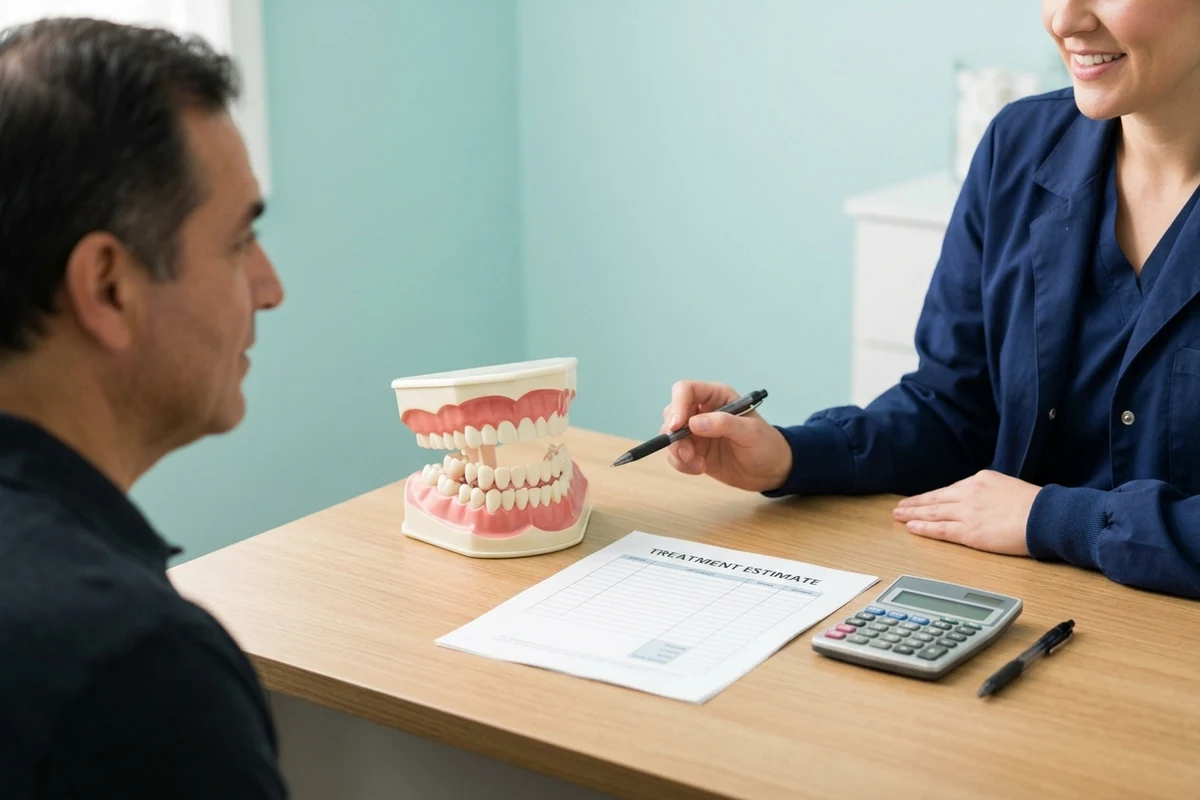
Finding a dentist without insurance Columbia PA patients can rely on involves exploring practical payment models for routine exams and cleanings, such as membership plans, community centers, and medical financing options.
Navigating preventive oral care without traditional benefits
Routine dental examinations and professional cleanings form the cornerstone of long-term oral health. For individuals lacking private dental coverage, accessing these fundamental services requires understanding clinic-level payment models designed to keep preventive care manageable outside conventional insurance networks.[2]
The impact of postponing routine examinations
Federal health data indicates that financial barriers frequently cause individuals to defer preventive dental appointments. Postponing routine cleanings allows silent conditions, such as superficial enamel demineralization and early gingival inflammation, to progress unchecked. Over time, these minor concerns develop into advanced decay or severe periodontal disease, requiring invasive and costly interventions.[2]
Finding self-pay pathways in Lancaster County
Patients seeking an affordable dentist Columbia PA area practices accommodate can explore several direct-pay solutions. Many dental offices provide transparent out-of-pocket fees or specific self-pay arrangements. Knowing which mechanisms exist locally enables individuals to prioritize preventive cleanings and comprehensive diagnostic evaluations before acute dental pain or complex infections arise.[1][2]
Factors influencing out-of-pocket preventive fees
Preventive appointment expenses depend on specific diagnostic needs and soft-tissue conditions. Understanding these clinical variables helps self-pay patients anticipate total costs when arranging an appointment for an oral examination and a standard professional cleaning.[4]
Prophylaxis versus periodontal therapy
A standard dental prophylaxis is designed for healthy gum tissue or reversible gingivitis, focusing on plaque and tartar removal above the gumline. If clinical evaluation reveals significant bone loss or deep periodontal pockets, therapeutic scaling and root planing becomes necessary, altering both the required clinical time and associated treatment costs.[4]
Diagnostic radiography requirements
Radiographic imaging is not performed on an arbitrary schedule but is prescribed based on individual risk factors and physical examination findings. Guidelines recommend capturing diagnostic radiographs strictly when clinically necessary, which prevents unnecessary radiation exposure while ensuring that diagnostic fees align directly with personal oral health risk profiles.[4]
Clinical indicators and appointment scheduling intervals
Scheduling an appointment should not depend solely on the presence of pain, as early oral diseases typically develop asymptomatically. Recognizing subtle physical changes ensures clinical intervention occurs while conditions remain easily manageable.[4]
Early signs that warrant professional cleaning
Individuals should seek a professional cleaning when observing surface calculus deposits, chronic bad breath, or gum tissues that appear erythematous or bleed during brushing. The American Dental Association supports personalized recall schedules, where low-risk patients visit every six months, while those with heightened risks may need visits every three to four months.[4]
Professional assessment during an examination
A comprehensive dental checkup involves systematic diagnostic protocols that evaluate the entire stomatognathic system. Clinicians use calibrated physical measurements and visual assessments to establish a clear baseline of oral health without relying on assumptions.[4]
Diagnostic components of the routine visit
The dentist performs extraoral and intraoral soft-tissue checks, including screening for suspicious lesions. Periodontal charting records pocket depths around each tooth using a millimeter probe, where healthy measurements range from one to three millimeters. Clinicians also inspect existing restorations and tooth surfaces for signs of active, demineralizing caries.[4]
- Extraoral head, neck, and intraoral soft-tissue cancer screening
- Six-point periodontal probing to detect inflammation and attachment loss
- Visual and tactile evaluation for active coronal and root caries
- Assessment of occlusal stability and structural integrity of restorations
Financial strategies for uninsured dental patients
Several structured alternatives exist to help patients afford routine exams and cleanings without traditional employer benefits. Evaluating these payment options allows patients to choose an approach that aligns with their personal budget and anticipated dental requirements.[2][3]
In-office membership arrangements versus discount networks
Many modern offices provide an in-office dental membership plan, where a monthly or annual subscription directly covers preventive checkups, cleanings, and diagnostic imaging. Alternatively, an independent dental discount plan allows patients to pay an administrative fee to access lower negotiated rates across a network of participating private dental providers.[2]
Community health centers and structured financing
Federally Qualified Health Centers offer sliding-fee scales based on household income and family size for regional residents. Patients can also explore structured dental payment plans to distribute costs over time, or consult a CareCredit dentist to utilize medical credit lines, remaining mindful of promotional terms and interest conditions.[1][3]

The sequence of a routine hygiene appointment
A typical preventive dental visit follows an orderly clinical sequence designed to maximize diagnostic accuracy and therapeutic cleanliness. Each step builds upon the previous one to ensure patient comfort, safety, and thorough oral disinfection.[4]
Ultrasonic scaling, polishing, and flossing
The dental hygienist utilizes specialized ultrasonic and hand instruments to scale away hardened calculus and soft plaque biofilm from enamel surfaces. Following mechanical debridement, a mildly abrasive paste polishes away extrinsic surface stains, and thorough interdental flossing clears dislodged debris from between tight contact points.[4]
Clinician consultation and topical fluoride
Following the physical cleaning, the dentist reviews diagnostic findings, discusses home hygiene modifications, and checks areas of potential concern. When deemed clinically appropriate based on individual caries risk, a topical fluoride varnish is applied directly to tooth surfaces to aid enamel remineralization and prevent subsequent decay.[4]
Home maintenance and preventive recall routines
Sustaining oral health between professional cleanings protects an individual's financial investment by minimizing the need for future restorative procedures. Effective home hygiene combined with consistent recall intervals keeps overall long-term dental expenditures predictable and manageable.[4]
Daily mechanical biofilm removal
Optimal oral care requires brushing twice daily for two full minutes using an accepted fluoride toothpaste to strengthen vulnerable enamel. In addition, cleaning between teeth daily using dental floss or interdental brushes eliminates bacterial plaque from interproximal surfaces that standard toothbrush bristles cannot reach.[4]
Establishing an individualized recall cadence
Preventive recall visits should be scheduled in consultation with your dentist according to clinical risk rather than arbitrary timeframes. Individuals managing diabetes, tobacco use, or a history of recurrent cavities benefit from more frequent monitoring, preventing minor tissue changes from expanding into costly dental emergencies.[4]
Managing diagnostic uncertainty and next steps
While visual examinations and cleanings maintain oral tissues, they may reveal asymptomatic pathology requiring further evaluation. Uninsured patients should request prioritized treatment sequencing from their dentist, addressing urgent structural issues first while maintaining routine preventive visits to protect long-term dental health.[2][4]
Sequencing treatment to manage expenses
If a checkup uncovers issues like localized decay or cracked fillings, clinicians can categorize treatments by urgency. Addressing active decay promptly prevents pulp involvement, which avoids root canal therapy or extractions. Maintaining routine cleanings remains the most dependable method to keep lifetime dental spending low.[2][4]
Sources
- millersville.edu — blogs.millersville.edu
- nih.gov — National Institute of Dental and Craniofacial Research
- hrsa.gov — findahealthcenter.hrsa.gov
- ada.org — American Dental Association
Common questions
Frequently asked questions
Plan your visit with Happy Smiles at Columbia
Contact Happy Smiles at Columbia to discuss your preventive dental care needs and schedule an appointment with our team to review your personalized care options.
More Articles
View all Preventive Dentistry
Mandarin Speaking Dentist Lancaster PA: Routine Exams & Cleaning in Chinese
Searching for a Mandarin speaking dentist Lancaster PA connects patients to essential routine preventive dental care, protected communication rights, and qualified language assistance under federal standards for comprehensive oral examinations and cleanings.September 16, 2026 · 6 min read Restorative Dentistry
Minimally Invasive Dentist Columbia PA: Dental Fillings That Preserve More Tooth
Seeking a minimally invasive dentist Columbia PA helps patients preserve healthy enamel and dentin. Modern conservative techniques arrest early tooth decay, support pulp vitality, and utilize bonded restorations instead of aggressive drilling.September 16, 2026 · 6 min read Preventive Dentistry