
The Complete Guide to Wisdom Teeth Removal
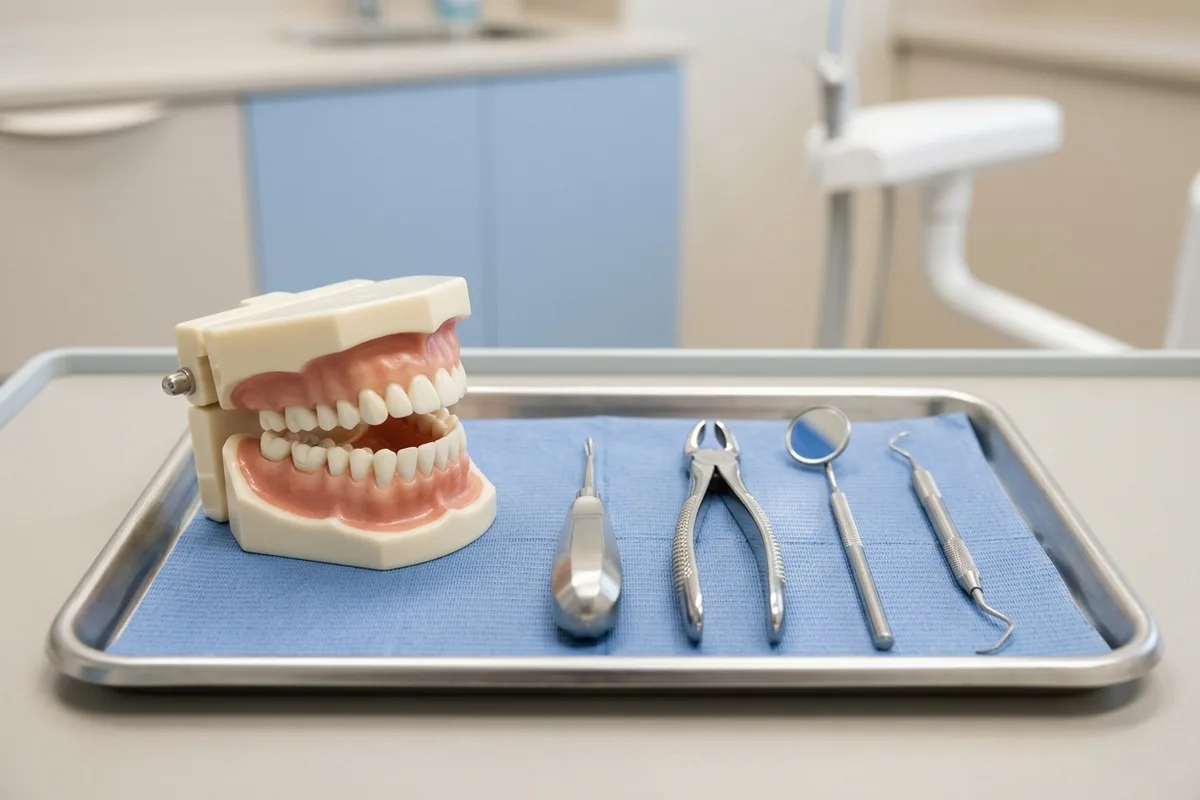
Wisdom teeth removal helps protect your smile from crowding, decay, and infection. Learn how the surgery works, how to heal well at home, and what foods to eat.
Wisdom Teeth Removal at a Glance (Key Facts)
Back molars, often called wisdom teeth, are the last teeth to push through your gums during young adulthood. Many people do not have enough room in their jaws for these teeth to fit neatly in line. When teeth get stuck under the bone or gums, dentists often suggest taking them out before trouble starts.
Knowing the basic facts can help you feel ready for your visit. Here are key facts to keep in mind about your care and healing time:[3][4]
- Third molars usually try to emerge between the ages of 17 and 21 (s3-f1).
- Around 24.4% of people over age 17 have at least one stuck back tooth (s5-f4).
- Taking these teeth out before age 20 often leads to an easier healing process (s4-f8).
- Initial healing for the gum socket takes about one to two weeks (s1-f9).
- A lost blood clot (dry socket) occurs in about 5% to 10% of cases (s5-f7).
What Is Wisdom Teeth Removal? (Quick Definition)
Wisdom teeth removal is a planned surgical procedure that takes out one or more of your third molars. These large chewing teeth sit in the very back corners of your upper and lower jaws. When a tooth cannot push all the way through your gums, it is known as an impacted tooth.
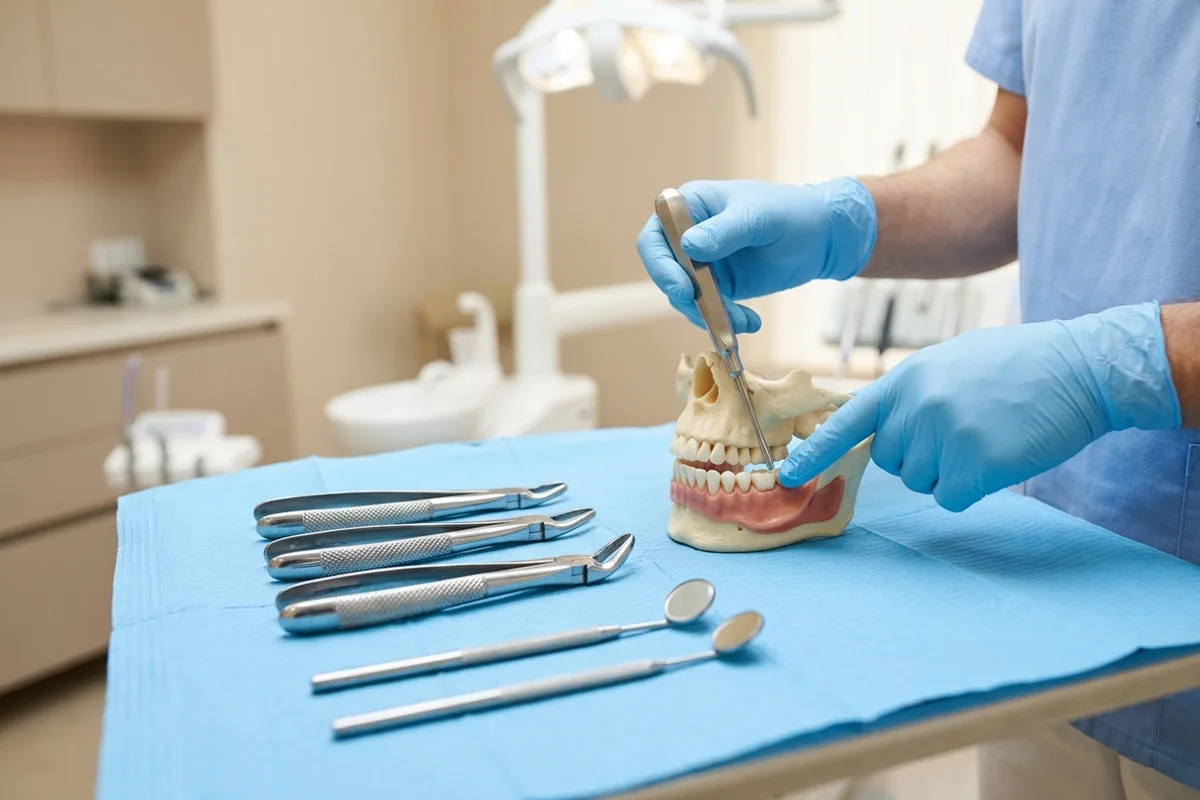
This oral surgery differs from a simple tooth pull because stuck teeth often sit under gum tissue or jawbone. Your dentist or surgeon makes a small opening in the gum to reach the tooth safely. They may take away a tiny bit of bone or split the tooth into smaller pieces to lift it out gently.[1][3][4]
Who It Suits
When Removal Helps You
This procedure helps people who have painful, stuck teeth or recurring gum irritation in the back of the mouth. When a back tooth only peeks through partway, bacteria and food collect under the flap of gum tissue. That buildup can lead to bad breath, tender swelling, and damage to neighboring teeth.
Removal also helps when a fluid-filled sac (cyst) forms around the tooth crown and damages your jawbone. Your dentist may also recommend taking them out as part of orthodontic treatment to make room for your bite.[3][4]
When Teeth Can Stay in Place
You might not need surgery if your back teeth grow in straight, bite properly, and stay easy to clean every day. In these cases, keeping your teeth can help with chewing as long as you brush and floss them well.
Your dentist will take X-rays to check the bone and roots during regular checkups. Teeth that stay in your mouth require ongoing watching because the chance of dental issues grows as you get older.[3][4]
How Wisdom Teeth Removal Works (Step by Step)
Planning and Preparation
Your dentist takes dental X-rays to check the position of your teeth and the shape of your jawbone. You will talk about your health history, including any heart or liver issues, so the team can plan safe care. Wear loose clothing with short sleeves to your visit, and arrange for someone to accompany you on the day of surgery.[1][2][3][4]
The Surgical Extraction
Your surgeon numbs the area around the tooth so you stay comfortable throughout your oral surgery. They make a small cut in the gum tissue and may divide the tooth into smaller pieces to ease it out gently.[1][4]
Cleaning and Closing the Site
Once the tooth is out, your dentist smooths the remaining bone and may place dissolving stitches (sutures) to close the gum. You then bite gently on a clean pad of damp gauze to help form a healthy blood clot.[1]
Types and Options
Back teeth can sit in different positions under the gum line, which changes how your surgeon takes them out. The table below outlines common ways wisdom teeth sit in the jaw and how dentists handle each one.[4][5]
| Position Type | What It Is | Typical Approach |
|---|---|---|
| Soft Tissue Impaction[1][5] | Tooth crown sits under gum tissue only | Small cut in gum to lift tooth out |
| Partial Bony Impaction[1][5] | Tooth is partly trapped in jawbone | Small gum cut and minor bone removal |
| Complete Bony Impaction[1][5] | Tooth is fully encased in jawbone | Sectioning tooth into pieces if hard to remove |
| Angled Impaction[1][5] | Tooth tilts sideways toward neighbor | Dividing tooth into pieces to remove it |
Recovery and Care
Caring for Your Mouth the First 48 Hours
Plan to rest quietly at home right after your appointment so your body can start to mend. Place an ice pack against your cheek for 10 to 20 minutes at a time during the first day to limit facial puffiness. Keep biting gently on clean gauze until the initial oozing stops.
You should not use a straw or rinse your mouth with force for at least 24 hours after surgery. Strong suction can pull the fresh blood clot away from your bone and cause a painful dry socket.[1][2]
What You Can Eat and Long-Term Healing
Patients often wonder what can you eat after wisdom teeth removal to stay nourished while protecting the healing area. Stick to a smooth, soft diet like yogurt, warm soup, and mashed potatoes for the first two days. Avoid crunchy, hard, or chewy foods for a full week so small food bits do not get stuck in the socket.
You can brush your other teeth gently the day after surgery, but steer clear of the healing area for three days. Starting about three days after surgery, rinse softly with warm salt water made with half a teaspoon of salt in one cup of water. If your jaw feels tight after two or three days, apply a warm, damp cloth to loosen the muscles.[1][2][4]

Common Mistakes to Avoid
Small slip-ups during home care can slow your healing or loosen the blood clot that protects your jawbone. Following simple guidelines will keep you on track for a smooth healing period without extra dental visits.[1][2]
- Sipping through a straw: Drink straight from a cup so suction does not pull out the healing blood clot (s1-f6, s2-f6).
- Smoking or vaping: Avoid tobacco products while your mouth heals to protect the socket from harm (s2-f5).
- Eating hard or crunchy foods: Choose soft items like pudding, yogurt, or broth for the first week (s1-f7).
- Vigorous spitting or rinsing: Avoid vigorous rinsing until clotting is complete, and swish warm salt water very gently starting about three days after surgery (s2-f5, s4-f7).
- Brushing near the wound too soon: Avoid the surgical spots for at least three days while brushing other teeth (s1-f8).
Risks
Wisdom tooth surgery is very common, but like any surgical care, it carries some possible risks. Problems after third molar removal occur in 2.6% to 30.9% of cases, with lower jaw teeth having higher rates than upper ones. A wound infection can occur in about 10% of healthy patients, and that chance rises to 25% in people with lower immunity.
A dry socket happens in 5% to 10% of patients, usually showing up three to five days after surgery. Temporary nerve numbness happens in up to 2% of patients, while long-lasting nerve harm occurs in about 0.5% of people. The risk of temporary nerve change can reach 20% if your tooth roots touch the main jaw nerve canal.[1][5]
What Affects the Cost
The overall fee for your surgical care depends on how many teeth need to come out and where they sit. A tooth hidden deep in your jawbone takes more time and surgical skill than one that has already peeked through your gums. The type of numbing medicine or sedation you choose for your visit will also change the final cost.
Your dental insurance benefits, yearly maximums, and any need for diagnostic X-rays will also shape what you pay out of pocket. At Happy Smiles at Columbia, our team can review your treatment plan and outline all fees before your procedure begins.[3][4]
Words You May Hear
Your dental team might use a few clinical phrases when talking about your back molars and your surgical plan. Here is a simple guide to what those words mean in plain language:[1][3][4][5]
- Impacted tooth: A tooth that cannot break all the way through the gum tissue (s4-f1).
- Pericoronitis: Swelling and irritation in the gum flap resting over a partially emerged tooth (s4-f3).
- Dry socket: A painful issue where the blood clot dissolves early and leaves bone bare (s5-f7).
- Cyst: A small fluid sac around a stuck tooth that can harm nearby bone (s3-f5).
- Sutures: Dissolving stitches placed over your gum to help it heal closed (s1-f2).
Sources
- Tooth extraction — medlineplus.gov
- Wisdom Tooth Surgery — American Association of Oral and Maxillofacial Surgeons
- Wisdom Teeth — American Dental Association
- Impacted tooth — medlineplus.gov
- Background — National Center for Biotechnology Information
Common questions
Frequently asked questions
Questions about your own smile?
If you have questions about your wisdom teeth, call 717-684-4666 to speak with Dr. Qilin Xu at Happy Smiles at Columbia. We are here to help you feel comfortable about your smile.
More Articles
View all Dental care
The Best Cosmetic Dentistry Treatments, Compared
Explore the top cosmetic dentistry treatments to fix chips, gaps, and tooth stains. Compare how whitening, composite bonding, and porcelain veneers improve your daily smile while considering your oral health.November 4, 2026 · 6 min read Dental care
How to Get Rid of Tonsil Stones (Step-by-Step)
Tonsil stones are small, harmless buildups in the back of your throat. Learn how to get rid of tonsil stones safely at home and when to ask your dentist for help.November 3, 2026 · 6 min read Dental care