
The Complete Guide to Dental Implants
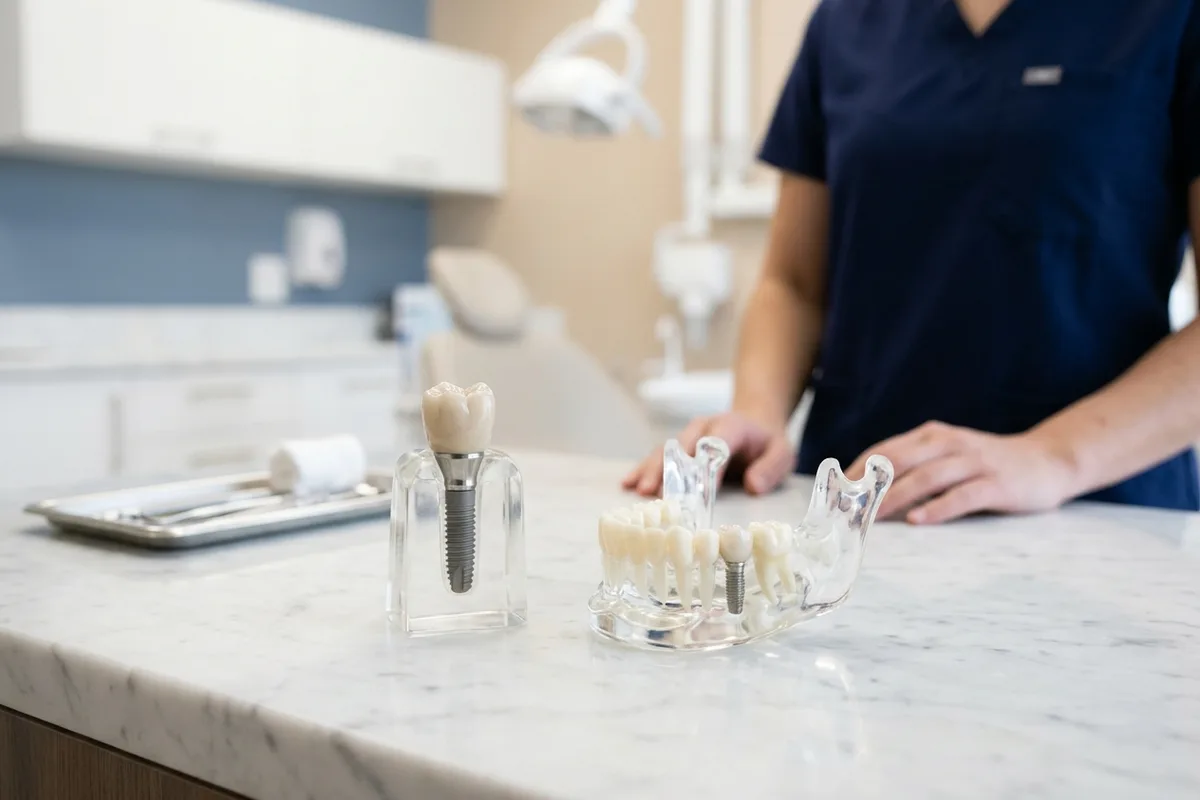
Dental implants offer a secure way to hold new teeth in place. Learn how the process works, what helps healing succeed, and what shapes your total care.
Dental Implants at a Glance
A dental implant serves as a sturdy post placed into your jawbone to support a crown or bridge. Because the post bonds directly with living bone, it creates a firm base for chewing your everyday meals. People choose this care to replace a single missing tooth, several lost teeth, or a full mouth of teeth. Keeping your mouth healthy before and after care helps ensure these posts stay strong for years.[1][2][5]
- Posts placed directly inside your bone serve as the most common kind of tooth support.
- Early bone healing can take two months with textured posts, while dense bone may take three to four months.
- Upper jaw sites with softer bone often need five to six months of healing before you receive your final teeth.
- Good daily brushing and flossing help keep germ buildup away so your new teeth can last a lifetime.
What Are Dental Implants?
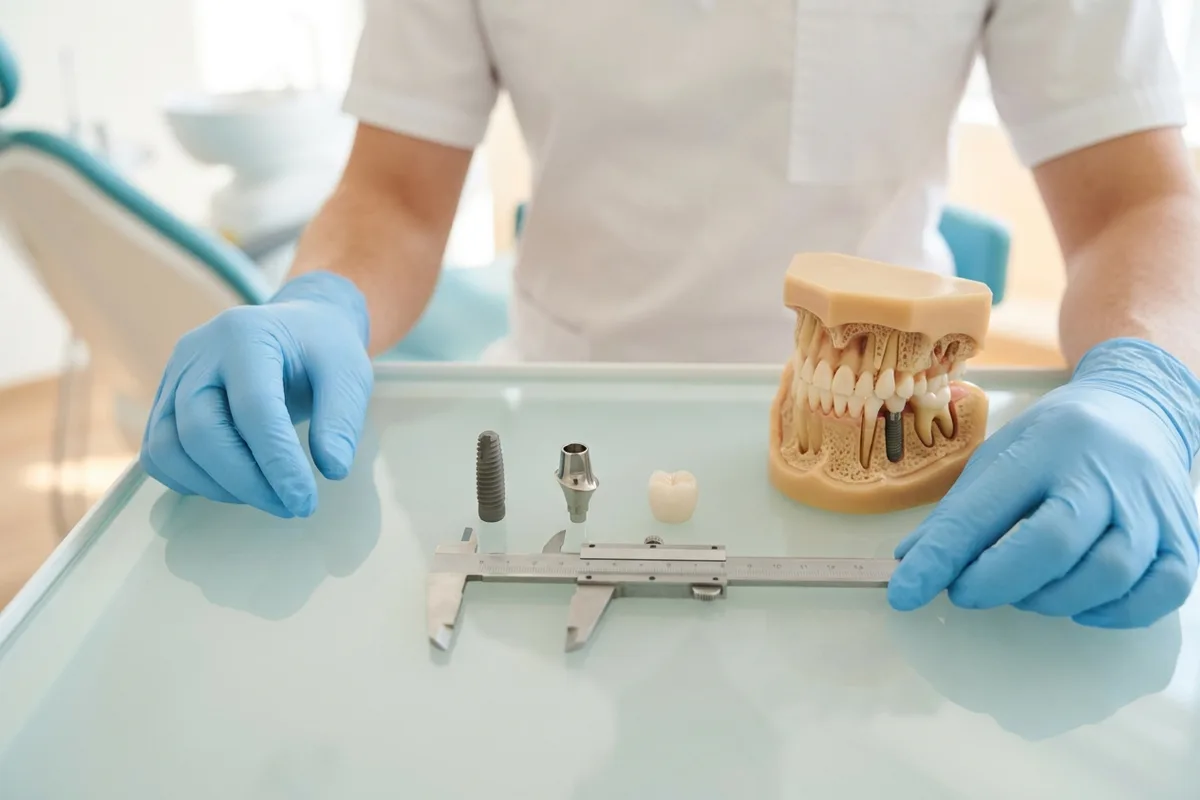
Dental implants are small titanium or ceramic posts that rest inside the jaw to replace missing tooth roots. Unlike removable dentures that sit on your gums, these posts anchor firmly into your bone to hold a fixed crown or bridge. Your dentist secures your new teeth to these posts so they do not slip when you talk or eat. This stable bond helps you chew comfortably while protecting the natural shape of your jawline.[1][5]
Who It Suits
Your dentist will check your mouth and medical background to see if this treatment fits your personal health needs.[1]
Who Makes a Good Candidate
Good candidates have healthy gums with no active gum disease (periodontal disease) and enough bone to support the posts. They also enjoy good general body health and maintain solid daily brushing habits at home. If your upper back jaw lacks height, raising the sinus floor can build extra bone depth to secure a post. Your dentist can also rebuild narrow spots in your jaw using bone graft material before setting the posts.[1]
Who May Need Extra Care First
Certain body health conditions can slow down healing and raise the chance that a post will not hold. People with uncontrolled blood sugar (diabetes), active mouth infections, or heavy tobacco habits face higher risks of post failure. Taking blood thinners or steroid medicines can also complicate bone healing after your visit. In these cases, your dentist may work to balance your health before starting your care.[5]
How Dental Implants Work (Step by Step)
The path to a restored smile involves several careful stages to make sure your bone bonds securely with each post.[1][5]
1. Planning and Bone Checks
Your dentist first inspects your mouth and takes clear X-ray pictures to check your bone height and width. A post needs enough solid bone around it so that it stays firmly anchored under daily chewing pressure.[4][5]
2. Placing the Post
During your visit, your dentist gently places the post into your jawbone beneath the gumline. You will rest comfortably while the area remains completely numb throughout the entire surgical visit.[1]
3. Bone Bonding and Healing
Your jawbone slowly grows around the post to lock it in place (osseointegration) over several months. You must protect the healing spot from direct chewing pressure during this critical recovery window.[5]
4. Attaching Your New Tooth
Once the post is fully secure, your dentist attaches your custom crown or bridge on top. Your dentist checks your bite and takes baseline measurements around the post to monitor your health over time.[1][4]
Types and Options
Dentists use different kinds of posts depending on how much jawbone you have and how many teeth you need to replace. The table below outlines common choices your dentist may discuss with you during an exam.[1][2]
| Implant Option | Where It Sits | Best For | Expected Lifespan |
|---|---|---|---|
| In-bone post (endosteal)[1][2] | Directly inside the jawbone | Patients with good bone height | Can last a lifetime with good care |
| On-bone frame (subperiosteal)[1][2] | Rests on top of the bone | People with low bone who cannot wear dentures | Can last many years with good care |
| Single post support[1][2] | Directly inside the jawbone | Replacing one missing tooth | Can last a lifetime with good care |
| Full-arch bridge[1][2] | Multiple posts in the jawbone | Replacing an entire row of teeth | Can last a lifetime with good care |
Recovery and Care
Taking good care of your mouth after surgery protects your new posts and helps your gums heal smoothly.[1][5]
What to Expect During Healing
You may notice mild gum swelling, slight bruising, or light oozing for a couple of days after placement. These common reactions usually calm down quickly as your mouth rests. Keep all hard chewing pressure completely off the new post while your bone knits firmly around the metal.[5]
Long-Term Daily Cleaning
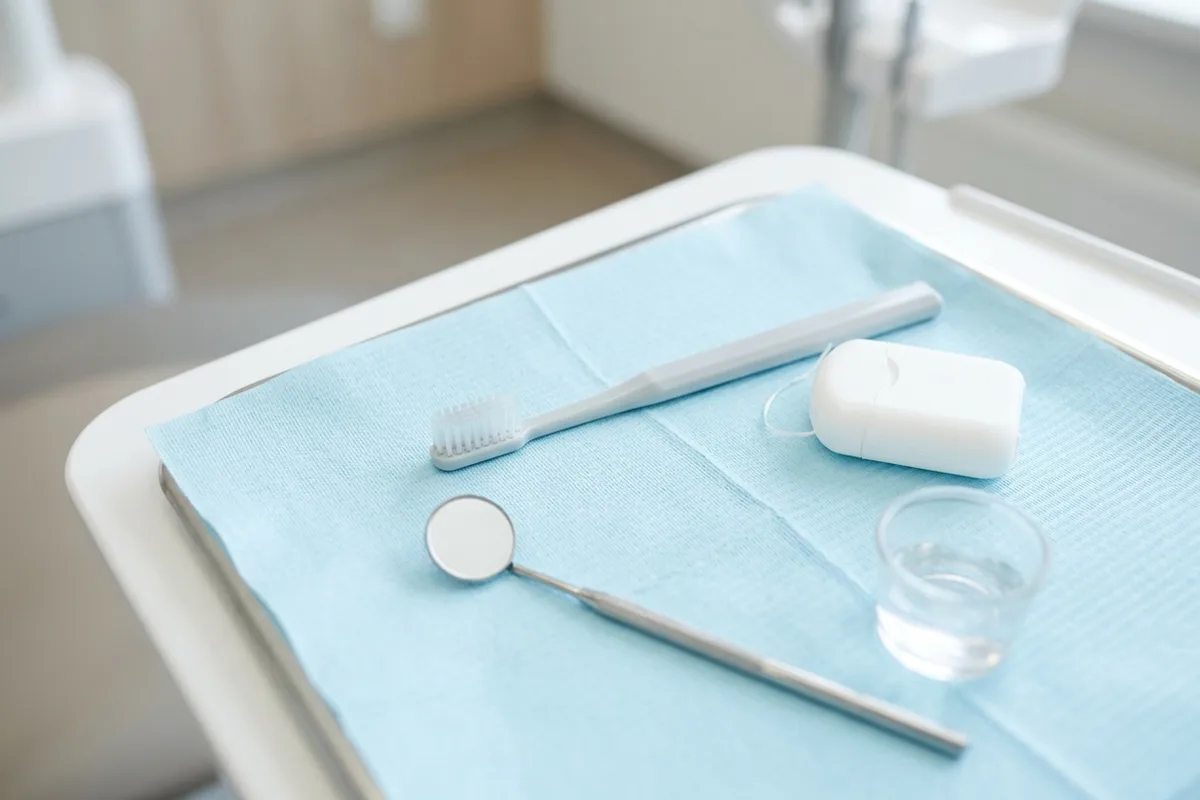
Even though posts cannot get cavities, germ film can still gather along your gumline and cause swelling. Clean around your new teeth twice every day with a soft brush and clean between them with floss. Scheduling regular dental checkups gives your dentist time to track your bone levels with standardized X-rays.[1][2][4]
Common Mistakes to Avoid
Avoiding simple mistakes during and after your treatment helps protect your investment and keeps your smile healthy.[2][5]
- Chewing tough foods on a healing post too early, which can loosen the bond with your jawbone.
- Skipping your daily brushing and flossing, which allows germ buildup to irritate tender gum tissue.
- Using tobacco products during recovery, which slows blood flow and raises the chance of post failure.
- Ignoring nightly teeth grinding, which puts heavy bite pressure on posts and damages bone support.
Risks
Like any oral surgery, placing posts carries a few known risks that your dentist works carefully to avoid. Common short-term effects include minor mouth bleeding, local bruising, swelling, and small edges of the gum opening slightly. In rare cases, a nerve may suffer injury, leading to temporary or lasting numbness in your lower lip or chin. Other rare issues include sinus wall punctures, damage to nearby teeth, or a crack in the post or jawbone.[5]
What Affects the Cost
Many patients ask about tooth implant cost before starting care, and the final price depends on several personal details. Your total dental implants cost reflects how many teeth you need to replace, from a single crown to a full arch. If your jaw needs bone grafting or sinus lifting before surgery, those extra visits will also shape how much are dental implants. The materials used and your dental insurance coverage will also play a large role in your overall expenses.
Your dentist can give you a clear fee estimate before any treatment begins so you can plan with confidence. If you live near Columbia, PA, you can talk through your options with Dr. Qilin Xu at Happy Smiles at Columbia.[1]
Words You May Hear
Your dental team may use a few clinical terms when explaining your care. Here is what those words mean in plain language.[1][2][5]
- Osseointegration: the natural healing process where your living jawbone grows tight against the implant post.
- Peri-implant mucositis: mild, reversible gum swelling around an implant post without any loss of supporting bone.
- Peri-implantitis: deeper gum disease around an implant post that causes gradual loss of your supporting jawbone.
- Bruxism: the habit of clenching or grinding your teeth, which can strain healing dental posts.
Sources
- Dental Implant Procedures — American Academy of Periodontology
- Peri-Implant Diseases — American Academy of Periodontology
- Peri-implant mucositis — pubmed.ncbi.nlm.nih.gov
- Peri-implant mucositis and peri-implantitis: key features and differences — pmc.ncbi.nlm.nih.gov
- OSSEOTITE® Dental Implant System — accessdata.fda.gov
Common questions
Frequently asked questions
Questions about your own smile?
Contact Happy Smiles at Columbia to request an appointment and talk through your tooth replacement options with our friendly, welcoming team.
More Articles
View all Dental care
The Complete Guide to Root Canal Treatment
Root canal treatment clears bacteria and dying pulp tissue from inside an infected tooth to relieve pain, protect natural tooth structure, and restore normal chewing function with a permanent crown.November 12, 2026 · 5 min read Dental care
The Best Dental Mouth Guards, Compared
Custom night trays from a dentist shield your teeth from sleep grinding, while athletic guards cushion sports impacts. Compare fit, comfort, and care to find the right mouthguard for your smile.November 10, 2026 · 6 min read Dental care