
The Complete Guide to Root Canal Treatment
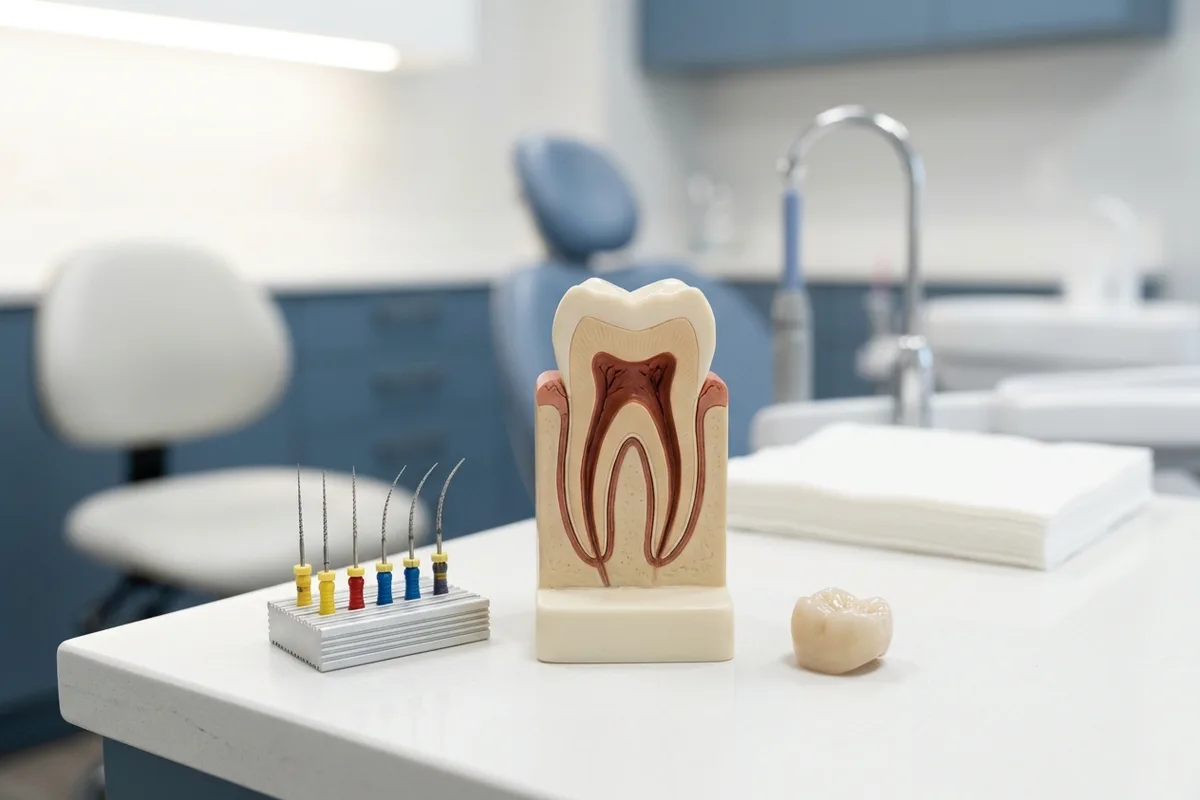
Root canal treatment clears bacteria and dying pulp tissue from inside an infected tooth to relieve pain, protect natural tooth structure, and restore normal chewing function with a permanent crown.
Root Canal Treatment at a Glance
A root canal treatment repairs and preserves a severely damaged or infected tooth so you do not have to have it pulled. Inside the tooth, soft pulp tissue can become inflamed or die from deep decay, trauma, or cracks. Treating the tooth clears away harmful bacteria and seals the hollow root space. This process protects the surrounding jawbone from deterioration.[1][2][5]
- The dental pulp houses nerves, blood vessels, and connective tissue inside the center of the tooth.
- Care usually takes one or two office visits under local anesthesia.
- Sealing the canals with a rubber-like material stops bacteria from regrowing.
- A permanent crown or filling is needed after treatment to restore chewing strength.
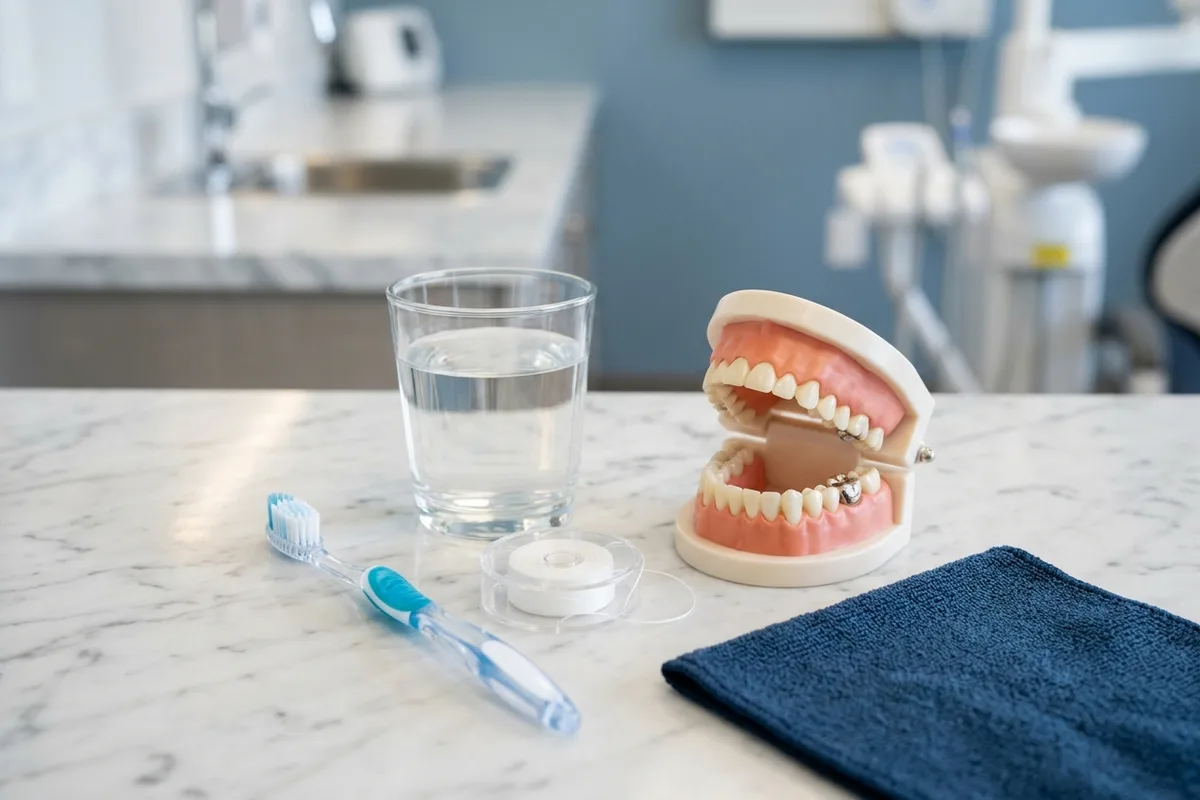
- Daily flossing and brushing twice a day for two minutes help the treated tooth last a lifetime.
What Is Root Canal Treatment?
A root canal treatment is a restorative dental procedure that removes infected, inflamed, or dead nerve tissue from within the tooth's root canals. People sometimes confuse this therapy with having a tooth pulled, but its goal is actually to save your natural tooth instead of extracting it. Your dentist cleans out bacteria from the hollow interior, disinfects the channels, and places a rubbery filling called gutta-percha. Unlike an extraction, which leaves a gap, endodontic therapy keeps your tooth root securely anchored in the jawbone socket.[1][2][4][5]
Who It Suits
Patients Who Benefit from Treatment
This care suits people experiencing tooth pain, lingering sensitivity to hot or cold food, or deep decay reaching the pulp chamber. It also helps teeth cracked by physical trauma, teeth with repeated dental work, or teeth with an abscess. By clearing out bacteria, the procedure preserves your natural tooth and stops infection from spreading into the jawbone.[1][2][3][4][5]
When an Extraction Is Needed Instead
In some cases, tooth damage or decay is too extensive for a root canal to succeed. If the tooth structure is broken beyond repair or cannot support a crown, your dentist must pull the tooth instead. When an extraction occurs, replacing the missing tooth with a dental bridge or dental implant prevents your neighboring teeth from shifting out of place.[3][4][5]
How Root Canal Treatment Works (Step by Step)
Step 1: Examining and Numbing the Tooth
Your dentist takes X-rays to inspect the tooth roots and bone. Then, a numbing gel and local anesthesia injection prevent pain, while a rubber dam keeps the tooth dry and germ-free.[2][5]
Step 2: Accessing and Removing Infected Pulp
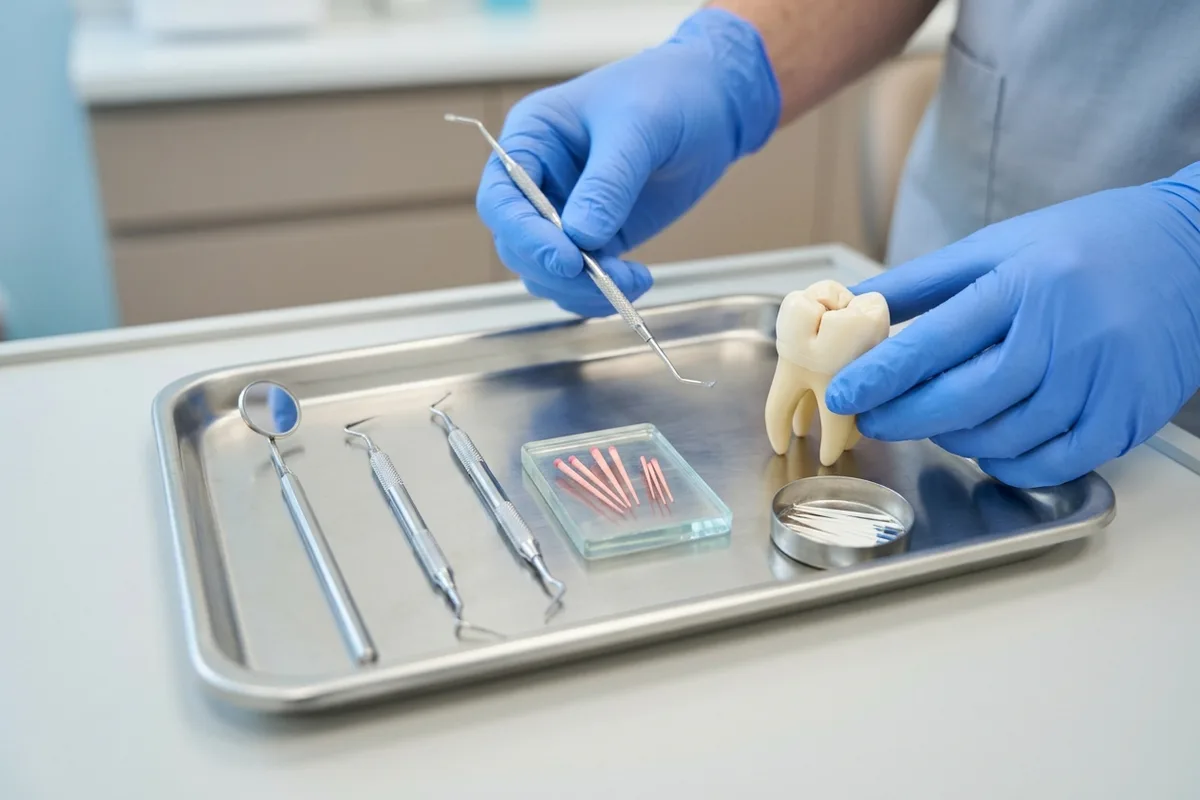
Your dentist uses a small drill to open the crown. Using slender instruments called files, your dentist removes the infected or dead pulp tissue from the root canals.[2][5]
Step 3: Disinfecting and Sealing the Canals
The pathways are washed with disinfecting liquid and germ-killing medicine. Your dentist fills the empty canals with a rubbery sealer called gutta-percha and places a temporary seal over the opening.[2][4][5]
Step 4: Placing the Permanent Restoration
At a follow-up visit, your dentist checks the tooth with an X-ray. Your dentist then places a permanent crown or filling, sometimes using an internal post, to restore chewing strength.[2][5]
Types and Options
Following endodontic cleaning, several restorative options protect the remaining structure based on how much natural enamel and dentin remain.[1]
| Restoration Option | Materials Used | Primary Benefit |
|---|---|---|
| Crown Restoration[2][4] | Gold, porcelain, or porcelain fused to metal | Protects weakened tooth structure from breaking |
| Permanent Filling[2][5] | Restorative filling material | Rebuilds tooth shape and seals the opening |
| Tooth Extraction[3] | Dental bridge or artificial implant | Replaces teeth when pulp damage is too severe to repair |
Recovery and Care
What to Expect During Recovery
Most people return to normal daily routines the same day. Mild soreness or sensitivity around the treated tooth is normal for a few days and responds well to over-the-counter anti-inflammatory medicines like ibuprofen. If infection has spread, your dentist may also prescribe antibiotics.[2][5]
Caring for the Restored Tooth
Avoid rough chewing near the treated tooth while a temporary seal is in place. After your permanent crown or filling is placed, brush twice daily for two minutes with fluoride toothpaste and floss daily. With regular checkups, your treated tooth can last a lifetime.[2][5]
Common Mistakes to Avoid
Skipping follow-up care or delaying restoration can cause a treated tooth to fail or fracture. Avoiding these everyday mistakes helps your tooth heal securely.[2][4]
- Chewing hard foods before the permanent crown is placed, which can crack the weakened tooth structure.
- Skipping the follow-up dental appointment and X-ray needed to confirm the infection has fully cleared.
- Delaying care when early toothache or temperature sensitivity begins, allowing decay to reach the inner pulp.
- Neglecting daily flossing and brushing, which allows plaque bacteria to cause new decay on neighboring teeth.
Risks
Complications can occasionally occur. A tooth may develop a recurrent root infection with pus, nerve damage, or cracking. In some cases, severe complications or untreated reinfection can lead to permanent tooth loss.[2][5]
What Affects the Cost
Several clinical factors influence the overall fee of endodontic treatment. The specific tooth involved changes the complexity because back molars contain more root canals than front teeth. The severity of the decay, whether an endodontist performs the procedure, and whether you require an internal post or a custom crown made of gold or porcelain also affect the total expense.
At Happy Smiles at Columbia in Columbia, PA, you can ask Dr. Qilin Xu about your options and discuss any questions before your procedure.[2][4][5]
Sources
- Tooth — American Dental Association
- Root canal — medlineplus.gov
- Tooth Decay — medlineplus.gov
- Dental cavities — medlineplus.gov
- Root Canals — American Dental Association
Common questions
Frequently asked questions
Questions about your own smile?
To plan your visit, call Happy Smiles at Columbia at 717-684-4666. You can schedule an appointment to ask questions and discuss your personal dental care needs.
More Articles
View all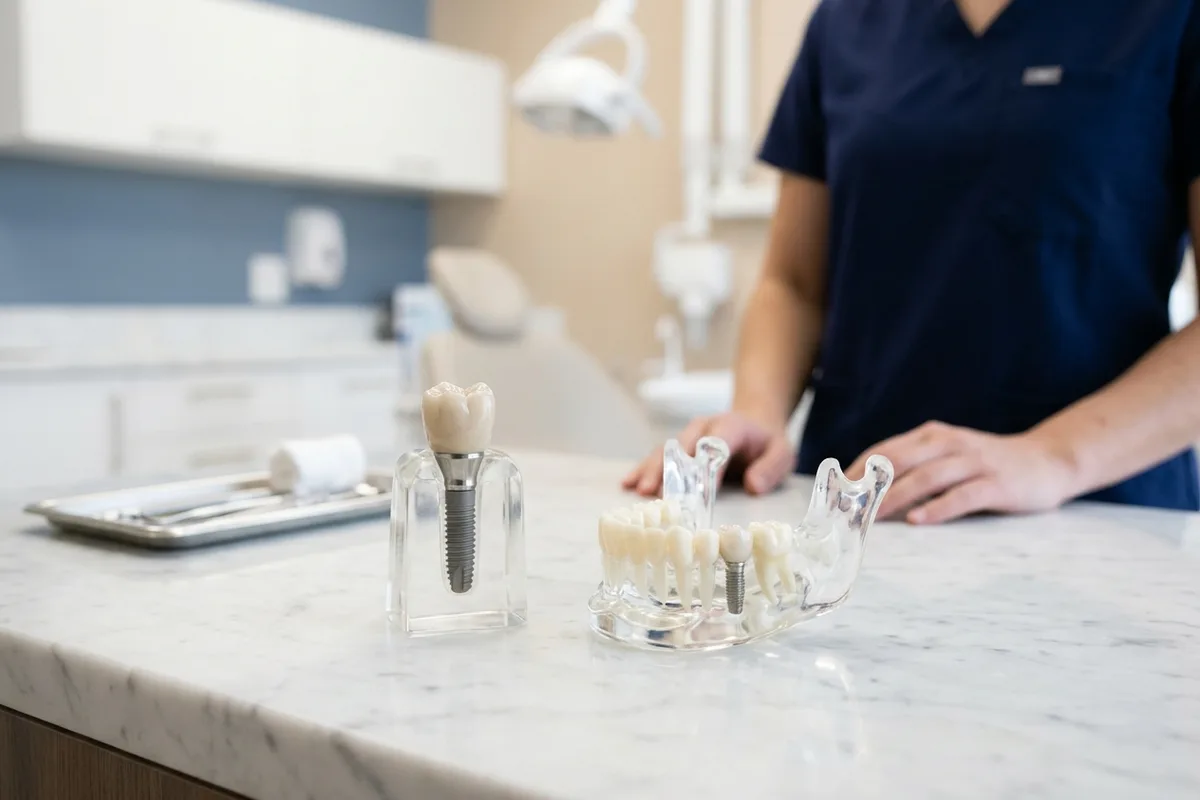 Dental care
The Complete Guide to Dental Implants
Dental implants offer a secure way to hold new teeth in place. Learn how the process works, what helps healing succeed, and what shapes your total care.November 11, 2026 · 7 min read Dental care
The Best Dental Mouth Guards, Compared
Custom night trays from a dentist shield your teeth from sleep grinding, while athletic guards cushion sports impacts. Compare fit, comfort, and care to find the right mouthguard for your smile.November 10, 2026 · 6 min read Dental care