
The Complete Guide to Veneers
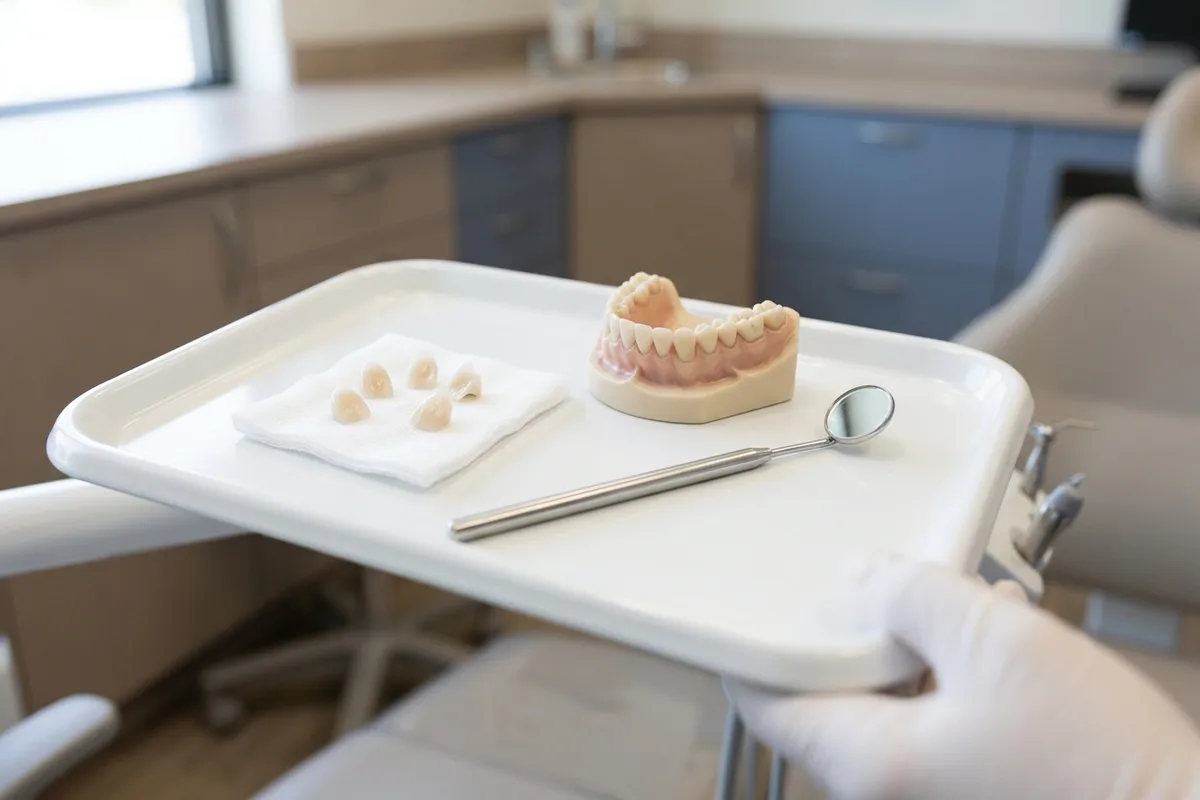
Discover what veneers are, how they improve your smile, what to expect during the procedure, how to care for them, and the factors that influence your overall treatment cost.
Veneers at a Glance
Veneers are custom shells that attach to the front surfaces of teeth to enhance their shape, shade, and overall look. Many patients wonder what are veneers when considering cosmetic dentistry, and they serve as a conservative way to conceal deep discoloration or minor dental flaws while preserving the rest of the natural tooth.[1][2][4]
- Enamel trimming is minimal, usually removing only 0.5 to 1 millimeter of front surface enamel.
- Porcelain options offer high durability and natural appearance, while composite resin choices require fewer visits.
- The enamel removal process is permanent, meaning prepared teeth will always need a restoration.
- Proper daily hygiene requires brushing twice daily with fluoride toothpaste and flossing once daily.
- Dental checkups remain essential, and toothbrushes should be replaced every 3 to 4 months.
What Are Veneers?
Veneers are custom-made shells bonded directly to the front of your teeth to correct gaps, chips, cracks, slight misalignment, or severe discoloration. Unlike full dental crowns, which encase an entire tooth down to the gumline, veneers are far more conservative because they cover only the visible facial surface and require trimming only 0.5 to 1 millimeter of enamel.
They also differ from direct composite bonding. While bonding applies soft resin directly to the tooth to fix small flaws in a single appointment and lasts several years, lab-crafted porcelain veneers are fabricated outside the mouth to mimic natural tooth color and provide enhanced strength and resilience.[1][2][4]
Who It Suits
Determining whether veneers suit your smile involves assessing both the aesthetic goals you have and the underlying health of your mouth.[1][4]
People Who Benefit Most
Veneers suit individuals dealing with chipped edges, fractures, developmental enamel flaws, or gaps between teeth. They are also well suited for teeth with deep internal discoloration—such as stains caused by childhood tetracycline use, excessive fluoride intake, or prior root canal therapy—that fails to respond to conventional teeth whitening.[1][2][4][5]
When Veneers May Not Be Suitable
Veneers may not be the right choice for individuals who habitually clench or grind their teeth, or those who have a deep overbite, because heavy bite pressure can damage the restorations. Additionally, active oral issues like tooth decay or gum disease must be treated first, as placing coverings over unhealthy teeth can worsen existing infections.[1]
How Veneers Work (Step by Step)
The process of getting veneers involves careful planning, precise preparation, and custom placement to ensure your restorations fit comfortably and look natural.[1][4]
Step 1: Clinical Examination and Planning
Your dentist first evaluates your teeth and gums to confirm they are healthy, because cosmetic care must preserve your general oral health. If a tooth previously had a root canal, X-rays verify that the canal filling is completely sealed before cosmetic work begins.[1][2][4]
Step 2: Enamel Preparation and Impressions
Your dentist gently trims a thin layer of outer enamel—typically 0.5 to 1 millimeter—from the front surface of the tooth. A physical or digital 3D mold is taken to guide fabrication, and temporary coverings may be placed to protect the prepared teeth.[1][2]
Step 3: Final Bonding and Placement
Once the dental laboratory crafts your custom shells, your dentist checks their fit and color. The restorations are permanently bonded to your teeth using adhesive resin cement, which gives monolithic porcelain restorations strong resistance against breaking.[1][2]

Types and Options
Dental veneers are available in different materials, each offering specific clinical advantages depending on your aesthetic goals, tooth condition, and schedule.[1][2]
| Veneer Type | Material Used | Key Advantages | Common Clinical Use |
|---|---|---|---|
| Porcelain Veneers[1][2][4] | Feldspathic or glass ceramic | Durable, natural appearance, and highly resistant to breaking when resin-bonded | Treating wear, chips, fractures, gaps, or stubborn stains |
| Composite Veneers[1][4] | Tooth-colored resin | Sculpted directly in fewer visits with less enamel removal | Minor chips, small gaps, and cosmetic repairs |
| Monolithic Zirconia Veneers[2] | Translucent zirconia ceramic | Strong masking ability over dark stains, bonded with special MDP primer | Severe internal discoloration from root canals or medications |
Comparing Porcelain and Composite
Porcelain veneers require making a mold and having a dental lab build the restoration, providing exceptional lifelike beauty and resilience. In contrast, composite veneers involve sculpting resin chairside and hardening it with a curing light in fewer appointments, but resin tends to wear and pick up stains more readily over time.[1][4]
Recovery and Care
Caring for your veneers involves maintaining a clean oral environment to protect both the restorations and the natural tooth structure underneath.[1][3]
Daily Cleaning Routine
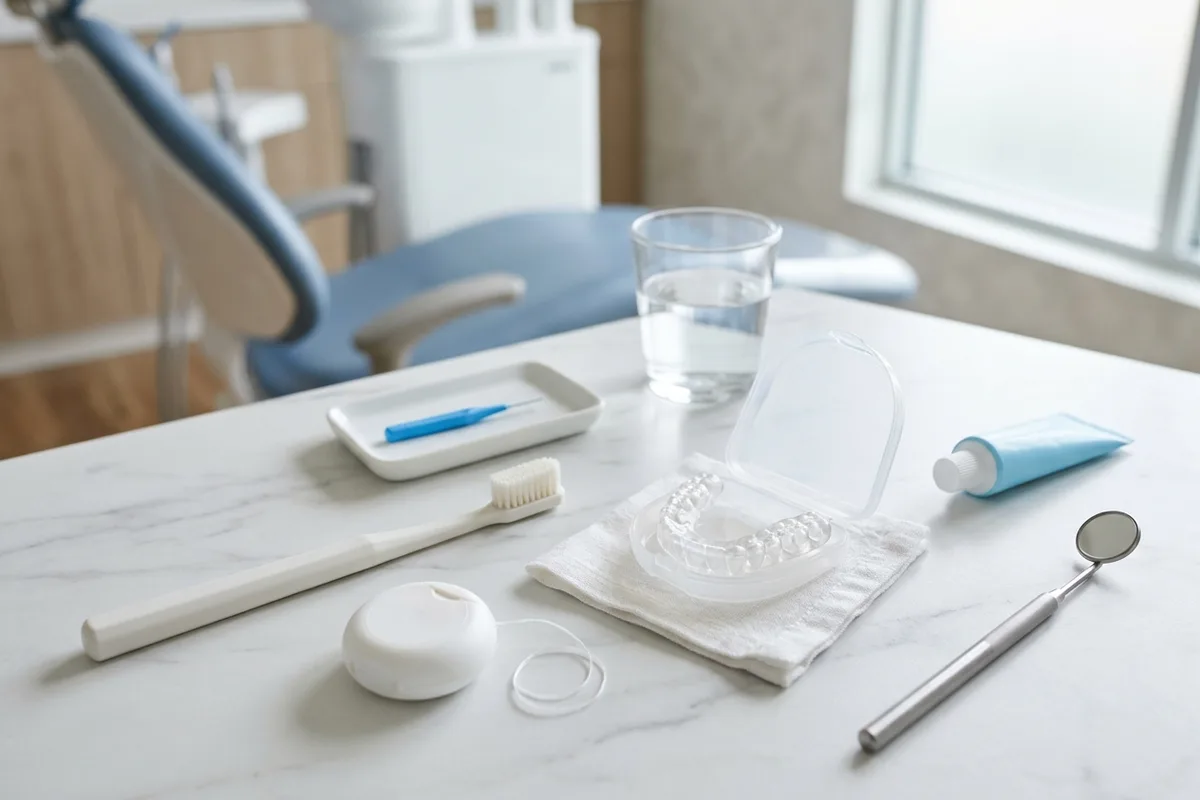
Veneers cannot get cavities themselves, but plaque bacteria still produce acids that erode exposed enamel, allowing decay to form along the margins of the shell. To protect against this, brush twice a day with fluoride toothpaste, floss daily, and replace your toothbrush every 3 to 4 months.[1][3][4]
Long-Term Protection
A balanced diet that limits snacking between meals helps shield your natural teeth from decay. Regular dental checkups help keep your smile healthy.[3][4]
Common Mistakes to Avoid
Avoiding common oversights helps safeguard your oral health and ensures your cosmetic restorations last as long as possible.[1]
- Covering active dental problems: Treat tooth decay and gum disease before placing veneers, because covering unhealthy teeth worsens existing infections.
- Using unlicensed providers: Avoid unlicensed individuals offering veneer services, which can cause permanent nerve damage, oral infections, or masked disease.
- Neglecting daily oral hygiene: Continue brushing twice daily with fluoride toothpaste and flossing daily, because untreated cavities can still form around veneer edges.
- Ignoring persistent toothache: Never delay visiting a dentist if you feel tooth pain, as discomfort can indicate underlying decay or nerve issues.
Risks
Because your dentist removes a thin outer layer of enamel to fit veneers, the procedure is irreversible and cannot be undone. Once prepared, the tooth will always depend on a restoration for protection.[1]
Wear, Cracking, and Maintenance
Over time, veneers may wear down, crack, or loosen from the tooth surface. When this happens, your dentist will need to repair, re-cement, or completely replace the restoration to restore protection and appearance.[1]
What Affects the Cost
Patients frequently ask how much are veneers and what factors influence overall treatment fees. The total veneers cost depends on several factors, including whether you choose composite resin or lab-crafted porcelain, the number of teeth being restored, and whether preparatory steps like internal tooth whitening or decay treatment are required.
Because veneers are primarily classified as cosmetic dentistry, dental insurance policies often exclude them from coverage unless treatment is deemed medically necessary. Your dentist can provide a clear treatment plan and explain the complete fee before any procedure begins, and you can speak with Dr. Qilin Xu at Happy Smiles at Columbia to review your options.[1][2]
Sources
- Veneers — American Dental Association
- The Role of Porcelain Veneers in the Aesthetic Restoration of Discolored Endodontically Treated Teeth — pmc.ncbi.nlm.nih.gov
- Oral Health — American Dental Association
- Cosmetic Dentistry Services - NYC — dental.columbia.edu
- Tooth - abnormal colors — medlineplus.gov
Common questions
Frequently asked questions
Questions about your own smile?
Contact Happy Smiles at Columbia at 717-684-4666 to schedule a consultation with our friendly team and discuss your cosmetic dentistry goals.
More Articles
View all Dental care
The Complete Guide to Full Mouth Dental Implants
Full mouth dental implants use sturdy metal posts in your jaw to hold complete arches of new teeth. Learn how these lifelike teeth work, what healing requires, and how to protect your smile.November 20, 2026 · 7 min read Dental care
Why Do I Have a Metallic Taste in My Mouth? 7 Common Causes
A persistent metallic taste in mouth tissues can come from gum irritation, dry mouth, or common medicines. Learn what triggers this distorted taste and how to find relief.November 19, 2026 · 5 min read Dental care